
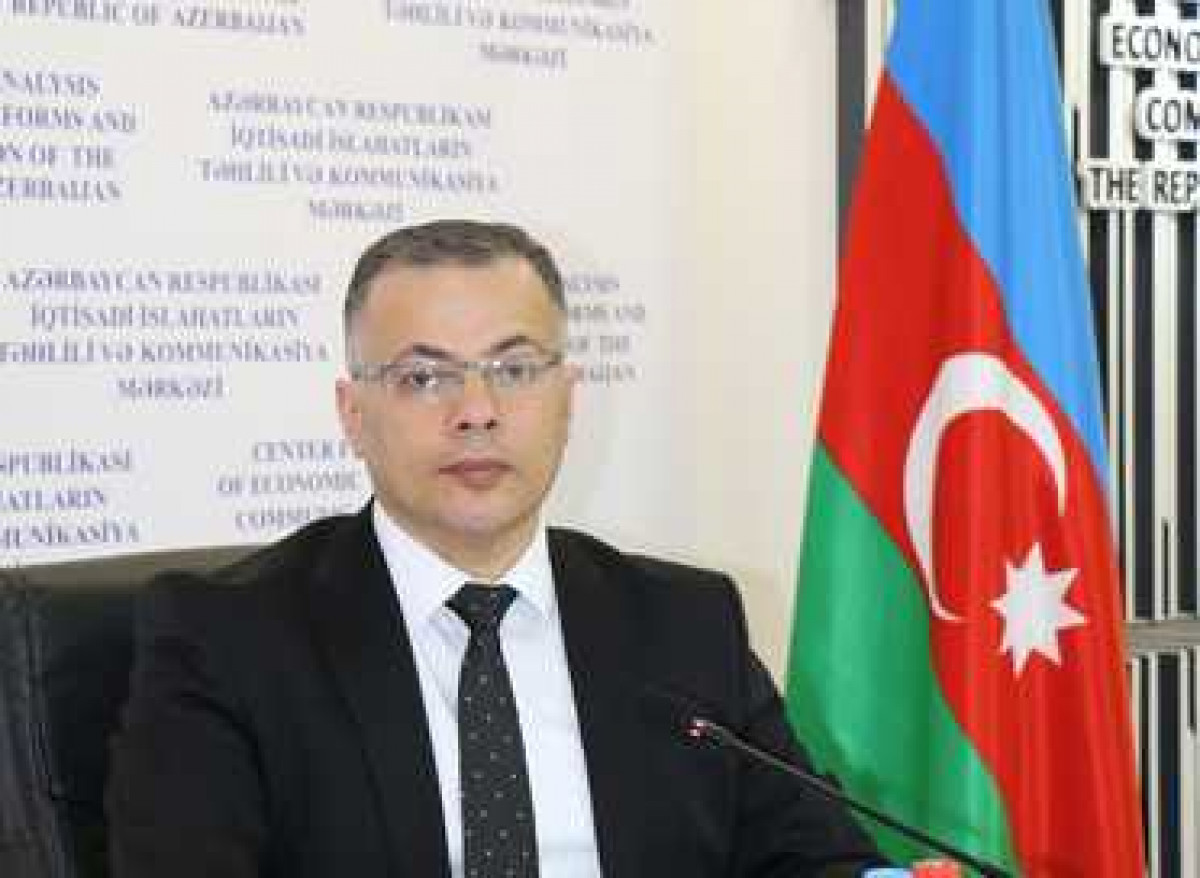
Vusal Qasimli: The Potential for Fintech Implementation in Azerbaijan is Vast
Dr. Vusal Qasimli, Executive Director of the Center for Analysis of Economic Reforms and Communication (CAERC) and Doctor of Economics, answered questions on global trends in financial technologies and the expansion of fintech applications in Azerbaijan.
How can the current global state of financial technologies be assessed?
The finance sector, whose development relies on precision, rationality, and agility, increasingly demands the application of new technologies such as artificial intelligence that enhance human productivity and reduce errors. Rapid growth is currently observed in the fintech sector. Key drivers of this development are startups from the United States, European countries such as the UK, Germany, and Sweden, Asian countries including China, Japan, South Korea, and India, as well as Brazil and Australia. According to the latest statistics, the number of fintech “unicorns” (startups valued over $1 billion) has reached 67, with a combined value of $244.6 billion. 57% of these companies are based in the US. The largest fintech by value is Lu.com from China at $39.4 billion, followed by US-based Stripe at $35.3 billion. The third position is shared by Ripple (US) and NuBank (Brazil), each valued at $10 billion. Notably, this growth is ongoing, with eight new startups emerging in the last quarter of the previous year and three in the first months of this year. By sector, small and medium-sized enterprises (SMEs) lead in the number of startups, with 140 active in the US alone.
Another important point is the strong investment interest from major financial companies in these startups. Goldman Sachs tops the list in investment value, acquiring 49 startups across 13 different specializations. Citi has financed 34 startups in 10 specializations, while JP Morgan has supported 22 startups. However, in 2019, total investments in this sector decreased compared to the previous five years, mainly due to a declining trend in seed and early-stage investments, which dropped from 67% in 2015 to 59% in 2019. This reflects a maturing market: rapid technological innovations and offerings are absorbed at a slower rate. In developed countries, investment growth has stabilized, while in developing countries, it continues.
What global trends can be highlighted in this sector?
Financial technologies are rapidly applied across a wide spectrum, including payment systems, money transfers, personal finance management, auditing and risk management, financial markets and investments, real estate, and insurance.
In 2019, insurance fintechs (insurtech) led in attracting investments, raising $1.8 billion in the last quarter and $6.8 billion over the year. These fintechs specialize in property, medical, business, and life insurance, as well as insuring small businesses. They streamline risk assessment, underwriting, and stakeholder coordination on unified platforms, making insurance procedures more efficient. Insurance remains a trend because demand persists as long as risk exists, explaining its leadership in investment volume.
Payment systems and money transfers are increasingly powered by blockchain technologies, enabling faster and more transparent transactions. Large companies using the Ethereum platform speed up procedures, reduce labor and costs, and facilitate entry into new markets. Fintech applications allow automated processing of costly clearing operations and extend services to small and low-revenue markets, thereby expanding company reach and revenue.
Artificial intelligence in banking is another global trend. Analytical bots handling risk management and underwriting, as well as chatbots managing customer service and small credit operations, make procedures more agile and transparent, improve customer satisfaction, objectively assess risks, expand bank operations, and reduce workforce costs, thereby increasing efficiency and profitability.
Digital banking and electronic credit platforms are expanding, especially in Asia and Latin America. In Singapore, over 26 companies applied for digital banking licenses last year, including technology firms like ANT Financial, Razer, and Xiaomi. These platforms enhance financial accessibility for micro and SME entities outside traditional banking. In the US, alternative lenders increase competition in the banking sector, improving service quality.
Technological solutions for SME financial and accounting management are increasingly applied globally. Specialized software optimizes company expenses, accelerates turnover, monitors current status, manages client relations, speeds up payments and transfers, and even supports investment attraction.
Fintech solutions are applied in both B2C (business-to-customer) and B2B (business-to-business) operations. B2C services, such as customer service, are largely automated through new technologies and chatbots. B2B processes, including import-export document flow, tax calculation and electronic payments, and international financial transactions, are increasingly automated with AI and blockchain.
Global fintech trends in financial markets include micro-investment platforms, robo-advisors, and electronic brokers. AI-based micro-investment platforms and robo-advisors are mainly applied in the US, managing payments, loans, assets, and investment strategies according to clients’ risk tolerance, future plans, and income expectations. Leading examples include Betterment (2008) and Wealthfront, while AI-driven brokers like Robinhood operate in the US and UK.
ESG (environmental, social, and governance) principles have become a key criterion in investment decisions. Major companies manage investment portfolios according to ESG, which can outweigh profitability. For example, Larry Fink, CEO of BlackRock ($6.9 trillion in assets), emphasized ESG investments, calling “climate risk investment risk.” Fintech contributes through startups like Carbon Delta and SynTao Green Finance, analyzing carbon emissions and ESG data.
Emerging trends include Regtech (regulatory technology) and Suptech (supervisory technology), first applied in the US and UK, with global adoption rising. In 2019, investments in these sectors more than doubled. They automate monitoring, evaluation, audits, legal compliance, plan implementation, and reporting, with continued growth expected in 2020.
Cryptocurrencies, while less popular than before, continue to facilitate transactions and remain investment options. Startups like Zenledger and TAXbit manage crypto taxation and portfolio tracking, while VERADY bridges crypto and traditional financial accounts.
Investments in real estate fintechs increased last year. AI-based platforms like Reonomy ($60 million) manage databases and market research, Cherre handles valuations and underwriting, Bowery automatically evaluates property, and marketplaces like PeerStreet, Roofstock, Qualia, and States Title coordinate stakeholders efficiently.
Does fintech development drive unemployment?
Companies prioritize reducing costs and increasing revenues. While AI reduces labor needs, in practice, its effect is more on expanding markets and operations. Employees are redirected to tasks requiring emotional and creative input, complementing AI and enhancing productivity.
How can the current state of fintech in Azerbaijan be assessed?
Under President Ilham Aliyev, innovative and digital solutions have been widely implemented. Banks and insurance companies increasingly adopt fintech. Mobile and digital banking are universal, while AI-powered chatbots are used by banks (PashaBank, RabitaBank, VTB) and private firms (Technote). Online credit and utility payment solutions are also deployed. Startups like Xercelerim, Bankoff.co, Botbox, and BNB Dynamics manage personal finance, SME connectivity, and robotic solutions.
According to Oxford Insights’ “AI Readiness Index” (2019), Azerbaijan ranks 64th, ahead of Iran (72), Georgia (76), and Armenia (81). Leading AI adopters include Singapore, Germany, and the UK. The index evaluates governance, AI infrastructure, skills and education, and government service utilization.
Challenges and prospects
Rapid development enables easier adoption of new technologies, showing strong potential for Azerbaijan’s fintech. Current narrow fintech applications indicate opportunities for insurance, real estate, and Regtech/Suptech implementation. Challenges include incomplete digital adoption and continued cash usage, which limit fintech growth. Systematic digitalization and startup encouragement can stimulate demand and innovation. Developing technical expertise, especially teachers, is critical.
Measures to foster fintech development in Azerbaijan
Recent measures aim to accelerate digitalization and increase cashless payments. The “State Program on Expanding Digital Payments in Azerbaijan (2018-2020)” improves legal and infrastructural frameworks, raises public awareness, and strengthens the digital ecosystem. Startup incubation and acceleration are supported through mentorship, consulting, and platforms like the EnterpriseAzerbaijan Portal.
AI awareness and motivation, investor-startup matchmaking, and communication campaigns are essential, as highlighted in the Stanford University AI Report. Annual Fintech Summits in Azerbaijan facilitate these objectives.
The upcoming FinTek Summit 2020 in Baku (May 14-15) will focus on “New Trends in Banking and Payment Ecosystems: Innovative Solutions, Financial Technologies, and Security,” supported by Visa, the Azerbaijan Banks Association, the Central Bank, and CAERC. The summit will foster knowledge exchange, discuss risks arising from fintech innovations, and explore best practices for regulation, financial stability, inclusivity, and customer satisfaction.
Global startup financing trends
CB Insights’ report “Companies Changing the World 2020” shows that of 36 globally impactful companies, 23 are in or moved to the US, highlighting its leading innovation ecosystem. Other countries include Canada, Israel, Sweden, Singapore, and the UK. Over 200 investors participated, with some investing in multiple companies simultaneously. Local incubators like EnterpriseAzerbaijan.com and Innoland prepare startups for global markets.
ICT-driven startups leading in impact focus mainly on healthcare, AI-based protein prediction, electro-impulse therapy, microbiome utilization, mental health, and genetic data exchange. Other categories include AI, quantum cryptography, carbon emission management, next-generation nuclear technologies, and photonic microchips. Azerbaijani startups should align with these global technological and social trends.
From 2016-2018, the global startup economy generated $2.8 trillion, a 20.6% increase from the previous period and double that of five years prior. Venture capital in 2018 reached $220 billion, a decade high. Multiple global hubs will emerge beyond Silicon Valley, with Azerbaijan holding potential in e-commerce and cross-border data flows.
Support for startups in Azerbaijan
Startups recognized as micro or small legal entities are tax-exempt on profits from innovation for three years. Over 20 incubation and acceleration centers operate, including public-private partnerships. Programs support startups with mentorship, consulting, and electronic project databases. Self-employment programs under the State Employment Service now support innovative projects, aligned with EnterpriseAzerbaijan.com portal initiatives.
In Silicon Valley, the Azerbaijan “Tech Diaspora” and Innovation House strengthen connections between Azerbaijani startup ecosystem participants worldwide. Startups can join three-month acceleration programs and attend demo days to meet investors.
EnterpriseAzerbaijan.com offers crowdfunding via Kickstarter, enabling global investment and pre-sales for local innovative projects. Collaborations with Newcastle University through the Creative Spark project support entrepreneurship education and startup development.
Role of fintech in SME financing globally
In Latin America, fintechs provide online financial access to SMEs underserved by banks. Examples include Credijusto (Mexico), Konfio (Latin America), AlphaCredit (Mexico and Colombia), and Cora (Brazil). These fintechs offer business loans, credit cards, financial monitoring, payments, invoices, and insurance services. Drawing on international best practices, fintech involvement in Azerbaijan could similarly improve credit access and reduce interest rates.
With Azerbaijan’s fixed assets valued at 200 billion AZN, annual investment of at least 10% of asset value is required for expansion. Investor participation is crucial for capitalizing the real sector. This enables banks and fintechs to provide more credit, supporting turnover and fixed assets.
Related news

A representative of the CAERC participated in a conference dedicated to the future…
Rashad Najafli, Deputy Director of the Economic Analysis Department of the Center for Analysis of Economic Reforms and Communication (CAERC), participated in the international conference on “New Challenges in Maintaining Financial…

New Opportunities in Technology Parks: Commercialization and Export of Innovations
The Decree of the President of the Republic of Azerbaijan dated October 22, 2026 on Amendments to the “Model Regulation on Technology Parks” provides for important innovations in terms of improving the activities of technoparks,…

Vusal Gasimli spoke at the opening of the Islamic Finance Forum
Vusal Gasimli, Executive Director of the Center for Analysis of Economic Reforms and Communication (CAERC) — a Doctor of Economic Sciences and Professor — delivered a speech at the opening ceremony of the "3rd Islamic…

CAERC expands cooperation with think tanks and universities in Uzbekistan
Ilyas Huseynov, Head of the Turkic World Research Center (TWRC) at the Center for Analysis of Economic Reforms and Communication (CAERC), held meetings with representatives from think tanks and higher education institutions, and delivered…

Meetings regarding preparations for the final monitoring and evaluation of the Socio-Economic…
The Center for Analysis of Economic Reforms and Communication (CAERC) has concluded a series of meetings with representatives from relevant government agencies. These meetings were held to refine outcome indicators for the year 2026—within…

The investment portfolio of “Enterprise Azerbaijan”’s partners exceeds 3 billion…
The global innovation program “Startup School 4: Five Continents – 500 Startups,” implemented by the “Enterprise Azerbaijan” portal of the Center for Analysis of Economic Reforms and Communication (CAERC),…

The establishment of the Karabakh National Park creates new opportunities for ecological…
The Order of the President of the Republic of Azerbaijan, Ilham Aliyev, dated October 20, 2026, "On the Establishment of the Karabakh National Park of the Republic of Azerbaijan," is regarded as a significant step toward…

World Bank: Azerbaijan’s strong financial buffers support economic stability and…
The "Europe and Central Asia Economic Update" and the "Macro-Poverty Outlook" for Azerbaijan, published by the World Bank in October 2026, indicate that the country has maintained its macroeconomic stability, strong…
Op-eds
Ilkin Gasimov
Chief advisor of the Economic analysis division
New Financial Model for Resource Allocation in General Education
Baghish Ahmadov
Advisor to the Executive director of the Center for Analysis of Economic Reforms and Communication
Azerbaijan International Investment Forum: Investment Cooperation and National Development Priorities
Abdulrahim Dadashov
Deputy head of the Monitoring and evaluation division
Environmental Responsibility is One of the Key Conditions in the Development of the Mining Industry
Latif Zeynalli
Head of State Programs Division
Development of Competition Will Create New Opportunities for Sustainable Economic Growth
Orkhan Sadigov
Head of the Monitoring and evaluation division
A New Approach to Managing Off-Budget Funds Will Strengthen Financial Discipline
Elshan Yusifli
Head of the Monitoring of sectoral programs sector
New Changes to Nakhchivan’s State Programme: Export, Logistics and Social Mechanisms Improved
Abdulrahim Dadashov
Deputy head of the Monitoring and evaluation division
New Law Strengthens the Sustainable Development and Digital Monitoring of the Fisheries Sector