
“Moody’s” Report: Azerbaijan Among Economically Resilient Countries
In its latest report, the international rating agency “Moody’s” has presented positive analyses regarding economic resilience in Azerbaijan. Despite the gradual decline in global oil and gas prices observed over the past three months due to the widening impact of the COVID-19 pandemic, the agency’s assessment of the country’s current ability to withstand external shocks is a positive signal.
The agency, which evaluates the current financial and macroeconomic framework, plays both a direct and indirect role in influencing foreign investors’ decision-making processes. “Moody’s” identifies Azerbaijan’s foreign exchange reserves as the key guarantee of macroeconomic stability. According to IMF (International Monetary Fund) methodology, these reserves consist of funds accumulated in the State Oil Fund and the Central Bank.
In the context of macroeconomic shocks, accumulated and properly managed reserves are considered the only reliable foundation for maintaining exchange rate and fiscal policy stability amid declining energy prices. Furthermore, the fact that oil and gas revenues-based reserves exceed public debt, along with their role in covering debt obligations and compensating budget deficits, provides additional assurance and confidence, serving as an important guarantee of macroeconomic stability.
The direct impact of the COVID-19 pandemic has led to a halt in global economic growth and continued recessionary pressure, slowing economic recovery. The global economic contraction, estimated between -5% and -10%, continues to affect Azerbaijan’s economy as well.
In January–May of this year, GDP output amounted to 27.48 billion AZN, representing a 1.7% decrease compared to the same period in 2019. The slowdown in production is driven by declining consumption, reduced domestic and foreign investment, and a contraction in net exports. It should also be noted that the decline in exports is not only due to the shift in global trade from diversification to concentration, but also reflects reduced price competitiveness in foreign trade operations as macroeconomic stability is maintained. In other words, local products have become relatively more expensive in key export markets, while imported goods have become relatively cheaper domestically.
These issues were also highlighted during a video conference between President Ilham Aliyev and the new Vice President of the World Bank and other representatives. In particular, the negative trade balance observed in May, largely driven by reduced oil exports, was one of the main contributing factors to the decline.
Nevertheless, under existing challenges, “Moody’s” emphasis on state reserves as a guarantee of economic stability can be interpreted as keeping Azerbaijan away from the risk zone in the medium term, despite current contractions. The agency’s statement regarding a 4.6% decline in the current account balance-to-GDP ratio is also directly linked to falling energy prices.
Due to the COVID-19 pandemic, reduced energy prices and declining exports of goods and services in the non-oil sector are expected to keep external indicators low as long as the pandemic persists. Since the surplus in the current account balance is directly tied to oil and gas prices, post-pandemic growth in the non-oil sector will require further expansion of investment and improvement of the business environment through deepening economic and legal reforms under the leadership of President Ilham Aliyev.
It is particularly noteworthy that during the World Bank video conference, a transition from a state-investment-driven model to a private-investment-driven model was proposed. This aligns with the directive given by the Head of State at the final government meeting in 2019 regarding the shift toward a private investment-oriented economic model.
Additionally, in the face of current economic challenges, the timely accumulation and risk-free management of foreign currency inflows from oil revenues in the form of reserves is the result of state policy. According to the report, “Moody’s” forecast that Azerbaijan will be the only country among oil-producing nations to record a budget surplus in 2021 can be considered a positive development.
In 2020, many oil-producing and exporting countries revised their budgets due to fiscal stimulus packages, declining oil and gas revenues, reduced transfers, and weakening economic activity, leading to expected deficits. However, Azerbaijan is projected to maintain a surplus, reflecting confidence in fiscal governance and expenditure management.
This outcome is based on trust in fiscal administration reforms and new approaches in budget expenditure management. Transparency and efficiency improvements in tax and customs administration have resulted in a budget surplus of 1.1 billion AZN in the first five months.
In particular, confidence in medium-term expenditure frameworks and the transition to performance-based budgeting has been recognized by international agencies.
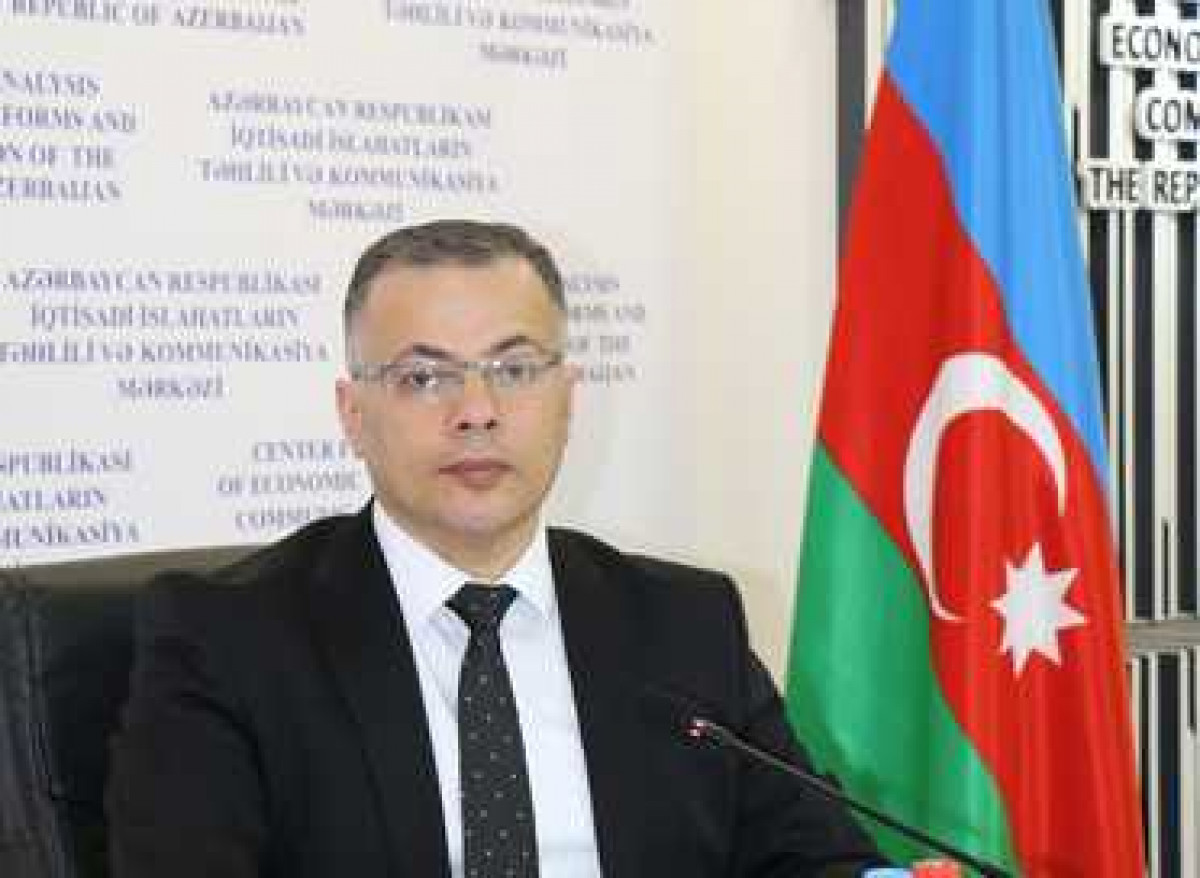
Nijat Hacizade, Head of Department at the Center for Analysis of Economic Reforms and Communication (CAERC)
Related news

A representative of the CAERC participated in a conference dedicated to the future…
Rashad Najafli, Deputy Director of the Economic Analysis Department of the Center for Analysis of Economic Reforms and Communication (CAERC), participated in the international conference on “New Challenges in Maintaining Financial…

New Opportunities in Technology Parks: Commercialization and Export of Innovations
The Decree of the President of the Republic of Azerbaijan dated October 22, 2026 on Amendments to the “Model Regulation on Technology Parks” provides for important innovations in terms of improving the activities of technoparks,…

Vusal Gasimli spoke at the opening of the Islamic Finance Forum
Vusal Gasimli, Executive Director of the Center for Analysis of Economic Reforms and Communication (CAERC) — a Doctor of Economic Sciences and Professor — delivered a speech at the opening ceremony of the "3rd Islamic…

CAERC expands cooperation with think tanks and universities in Uzbekistan
Ilyas Huseynov, Head of the Turkic World Research Center (TWRC) at the Center for Analysis of Economic Reforms and Communication (CAERC), held meetings with representatives from think tanks and higher education institutions, and delivered…

Meetings regarding preparations for the final monitoring and evaluation of the Socio-Economic…
The Center for Analysis of Economic Reforms and Communication (CAERC) has concluded a series of meetings with representatives from relevant government agencies. These meetings were held to refine outcome indicators for the year 2026—within…

The investment portfolio of “Enterprise Azerbaijan”’s partners exceeds 3 billion…
The global innovation program “Startup School 4: Five Continents – 500 Startups,” implemented by the “Enterprise Azerbaijan” portal of the Center for Analysis of Economic Reforms and Communication (CAERC),…

The establishment of the Karabakh National Park creates new opportunities for ecological…
The Order of the President of the Republic of Azerbaijan, Ilham Aliyev, dated October 20, 2026, "On the Establishment of the Karabakh National Park of the Republic of Azerbaijan," is regarded as a significant step toward…

World Bank: Azerbaijan’s strong financial buffers support economic stability and…
The "Europe and Central Asia Economic Update" and the "Macro-Poverty Outlook" for Azerbaijan, published by the World Bank in October 2026, indicate that the country has maintained its macroeconomic stability, strong…
Op-eds
Ilkin Gasimov
Chief advisor of the Economic analysis division
New Financial Model for Resource Allocation in General Education
Baghish Ahmadov
Advisor to the Executive director of the Center for Analysis of Economic Reforms and Communication
Azerbaijan International Investment Forum: Investment Cooperation and National Development Priorities
Abdulrahim Dadashov
Deputy head of the Monitoring and evaluation division
Environmental Responsibility is One of the Key Conditions in the Development of the Mining Industry
Latif Zeynalli
Head of State Programs Division
Development of Competition Will Create New Opportunities for Sustainable Economic Growth
Orkhan Sadigov
Head of the Monitoring and evaluation division
A New Approach to Managing Off-Budget Funds Will Strengthen Financial Discipline
Elshan Yusifli
Head of the Monitoring of sectoral programs sector
New Changes to Nakhchivan’s State Programme: Export, Logistics and Social Mechanisms Improved
Abdulrahim Dadashov
Deputy head of the Monitoring and evaluation division
New Law Strengthens the Sustainable Development and Digital Monitoring of the Fisheries Sector