
Is Metsamor the New Chernobyl?
Commentary by the Center for Analysis of Economic Reforms and Communication (CAERC)
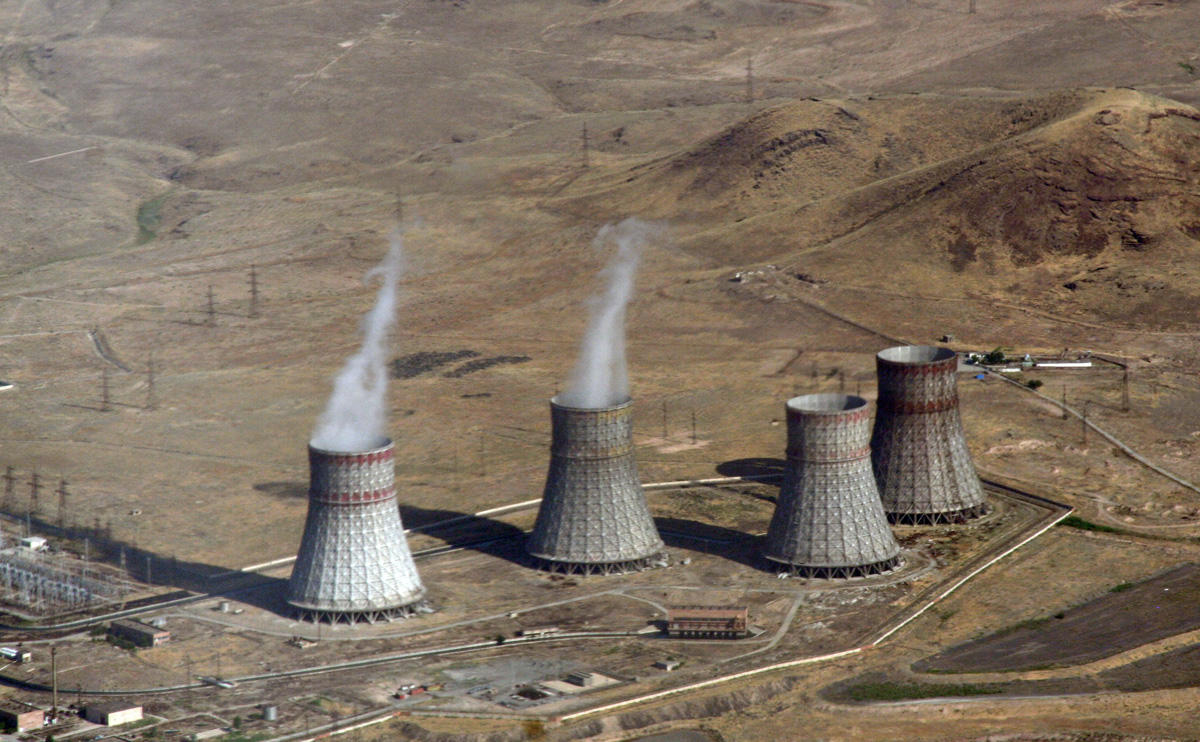
Armenia’s aging Metsamor Nuclear Power Plant (NPP) continues to pose a threat to regional environmental security. Antonia Wenisch from the Austrian Institute of Applied Ecology in Vienna, in her article published in National Geographic, described Metsamor as “one of the most dangerous nuclear plants still in operation.” In short, Metsamor is a ticking time bomb.
The plant was built in 1980, only 10 miles (16 kilometers) from the Turkish border, in a highly seismic zone of Armenia, and currently fails to meet any modern safety standards. Natural disasters such as earthquakes could cause severe damage to the NPP, potentially resulting in high levels of radioactivity across the South Caucasus and neighboring countries. The devastating 6.8-magnitude earthquake on 7 December 1988, which caused approximately 25,000 deaths, remains a stark reminder of the region’s seismic risks.
On the other hand, there is insufficient official information regarding the plant’s management and waste handling practices, which raises concerns about possible regional environmental disasters. According to some reports, Armenia disposes of radioactive waste in the occupied Nagorno-Karabakh region of Azerbaijan (internationally recognized as part of Azerbaijan, though currently under Armenian control). There are also credible claims that radioactive waste is transported via underground pipelines from the NPP to Nagorno-Karabakh.
Such developments also pose an environmental threat to Türkiye. Recent analyses by Turkish experts indicate that radiation-contaminated water from the plant continues to mix with groundwater resources, posing serious health risks to the population of Iğdır province. An increase in cases of childhood disabilities and cancer has been observed in the region.
The World Nuclear Industry Status Report (2020) states that the plant’s single active reactor currently generates 27.8% of the country’s total electricity production. The remainder of Armenia’s electricity is produced from hydropower, solar and wind energy, as well as imported natural gas.
In March 2020, the European Commission’s document “Eastern Partnership Policy beyond 2020” included recommendations on energy policy and nuclear energy, emphasizing the need to diversify energy supply, particularly through renewable energy sources. Considering Armenia’s substantial water resources (with Lake Sevan covering approximately 80% of total consumption needs), nuclear energy could be readily replaced by hydropower. Another alternative could be increasing the share of imported gas from Russia and Iran.
The European Commission, Türkiye, and environmental organizations specializing in nuclear safety have been exerting strong pressure on Armenia to shut down the plant, citing its potential risks and negative impact on the entire region. The core principles of the Paris Agreement and other environmental frameworks emphasize the wider adoption of green technologies as a means of combating climate change.
Despite global warnings and the requirements of confirmed international agreements, Armenia continues to demonstrate an unconstructive approach to its obligations, remaining a threat to both humanity and nature. Armenian media reported that in early June 2019 the plant was shut down for 110 days due to repair and modernization works, and again from 1 July 2020 to 3 September 2020 for another 65 days for preventive maintenance. Such so-called maintenance activities are seen as attempts to obscure the potential severity of a possible disaster that the plant may cause.
Related news

A representative of the CAERC participated in a conference dedicated to the future…
Rashad Najafli, Deputy Director of the Economic Analysis Department of the Center for Analysis of Economic Reforms and Communication (CAERC), participated in the international conference on “New Challenges in Maintaining Financial…

New Opportunities in Technology Parks: Commercialization and Export of Innovations
The Decree of the President of the Republic of Azerbaijan dated October 22, 2026 on Amendments to the “Model Regulation on Technology Parks” provides for important innovations in terms of improving the activities of technoparks,…

Vusal Gasimli spoke at the opening of the Islamic Finance Forum
Vusal Gasimli, Executive Director of the Center for Analysis of Economic Reforms and Communication (CAERC) — a Doctor of Economic Sciences and Professor — delivered a speech at the opening ceremony of the "3rd Islamic…

CAERC expands cooperation with think tanks and universities in Uzbekistan
Ilyas Huseynov, Head of the Turkic World Research Center (TWRC) at the Center for Analysis of Economic Reforms and Communication (CAERC), held meetings with representatives from think tanks and higher education institutions, and delivered…

Meetings regarding preparations for the final monitoring and evaluation of the Socio-Economic…
The Center for Analysis of Economic Reforms and Communication (CAERC) has concluded a series of meetings with representatives from relevant government agencies. These meetings were held to refine outcome indicators for the year 2026—within…

The investment portfolio of “Enterprise Azerbaijan”’s partners exceeds 3 billion…
The global innovation program “Startup School 4: Five Continents – 500 Startups,” implemented by the “Enterprise Azerbaijan” portal of the Center for Analysis of Economic Reforms and Communication (CAERC),…

The establishment of the Karabakh National Park creates new opportunities for ecological…
The Order of the President of the Republic of Azerbaijan, Ilham Aliyev, dated October 20, 2026, "On the Establishment of the Karabakh National Park of the Republic of Azerbaijan," is regarded as a significant step toward…

World Bank: Azerbaijan’s strong financial buffers support economic stability and…
The "Europe and Central Asia Economic Update" and the "Macro-Poverty Outlook" for Azerbaijan, published by the World Bank in October 2026, indicate that the country has maintained its macroeconomic stability, strong…
Op-eds
Ilkin Gasimov
Chief advisor of the Economic analysis division
New Financial Model for Resource Allocation in General Education
Baghish Ahmadov
Advisor to the Executive director of the Center for Analysis of Economic Reforms and Communication
Azerbaijan International Investment Forum: Investment Cooperation and National Development Priorities
Abdulrahim Dadashov
Deputy head of the Monitoring and evaluation division
Environmental Responsibility is One of the Key Conditions in the Development of the Mining Industry
Latif Zeynalli
Head of State Programs Division
Development of Competition Will Create New Opportunities for Sustainable Economic Growth
Orkhan Sadigov
Head of the Monitoring and evaluation division
A New Approach to Managing Off-Budget Funds Will Strengthen Financial Discipline
Elshan Yusifli
Head of the Monitoring of sectoral programs sector
New Changes to Nakhchivan’s State Programme: Export, Logistics and Social Mechanisms Improved
Abdulrahim Dadashov
Deputy head of the Monitoring and evaluation division
New Law Strengthens the Sustainable Development and Digital Monitoring of the Fisheries Sector