
Armenia’s Demographic Challenges: Depopulation and Racist Policies
Armenia’s Demographic Challenges: Depopulation and Racist Policies
Armenia’s decades-long occupation policy in the South Caucasus, as well as recent clashes in the Nagorno-Karabakh region, are rooted in its defeat factor.
Demographics in Armenia
One of the key threats facing Armenia is its deep and long-term demographic crisis. There is substantial evidence of these structural demographic problems. According to recent World Bank data, Armenia’s population has been steadily declining since 1990. The current population stands at around 2.9 million, while the birth rate is significantly below the replacement level, at approximately 1.6 children per woman. This indicates a gradual population decline.
Recently, Tsovinar Harutyunyan, Executive Representative of the UN Population Fund in Armenia, stated that the country has already reached the threshold of a demographic crisis and is approaching depopulation, a stage where mortality may exceed birth rates (Civilnet.am). According to experts, one of the main reasons is that the generation born in the 1990s is now entering reproductive age, but this cohort is about 40% smaller than those born in the 1980s. This significantly affects marriage and fertility rates. In addition, more than 25% of the 1990s generation has left Armenia. As Harutyunyan noted: “We must not forget migration. More than one million people have left Armenia.”
Analyses show that after independence in September 1991, Armenia’s population peaked in 1992 at 3.63 million (compared to 3.57 million the previous year). Between 1993 and 1995, a sharp decline occurred, reducing the population to 3.26 million. Since then, the decline has continued, reaching approximately 2.957 million in 2020. However, official statistics also include individuals who reside abroad for most of the year, including labor migrants working in Russia who return home only briefly during winter months.
It is estimated that between 1991 and 2019, around 1.12 million Armenians (about 31% of the population) were effectively living abroad despite being officially registered in the country. According to the State Statistical Committee of Armenia, the registered population declined by 668,000 between 1992 and 2019, reaching its lowest level of approximately 2.965 million.
Emigration continues to increase each year. Mass migration and severe socio-economic conditions have further reduced the population since the beginning of the Nagorno-Karabakh conflict and the occupation of Azerbaijani territories, leading to broader economic degradation.
Factors Driving Depopulation in Armenia
Armenian demographers warn of serious problems in three key areas: birth rates, migration, and population aging.
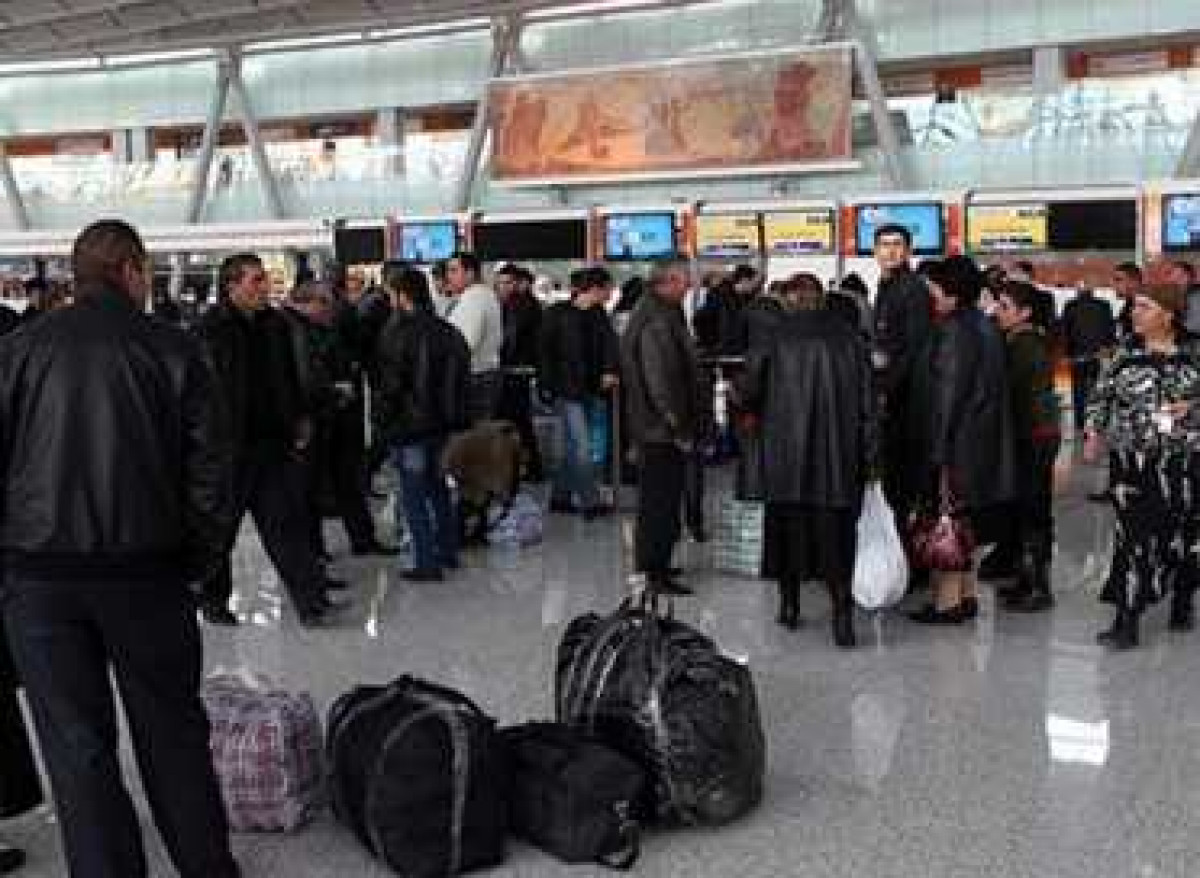
Emigration has long been a major issue. Alongside declining birth rates, migration levels continue to rise. According to official statistics (Hetq.am), net migration between 1992 and 2019 resulted in a negative balance of approximately 1.12 million people. This represents nearly 31% of the de jure population in the early independence period (3.575 million). As noted by Artak Markosyan, Head of the Demography Department at the Ministry of Labor and Social Affairs, “migration has left a deep impact on Armenia, as people of reproductive age are leaving the country.”
Most emigrants are young and working-age individuals, which has led to population aging and gender imbalance. The loss of approximately 60,000 young men aged 20–40 has further disrupted demographic structure. Researchers Heghine Manasyan and Gevork Poghosyan describe Armenia as an aging society, emphasizing that migration has caused serious consequences, including declining fertility, gender imbalance, and social instability.
The early 1990s population decline is largely explained by the collapse of the Soviet Union, economic crisis, and the Karabakh war. In addition to increased mortality, conscription and military-related pressures also encouraged migration. Over time, military service requirements were extended due to shrinking conscription pools. In 2017, legislation requiring students to serve 36 months if they deferred service further intensified emigration (The Armenian Weekly, 15 November 2017).
Fertility, Economy, and Social Conditions
UNFPA representatives report that although couples ideally want three children, they typically end up having one or two. According to the World Bank, Armenia’s fertility rate in 2019 was 1.6 births per woman.
Young people increasingly lack confidence in marriage and family responsibilities. The reluctance to form families is closely linked to difficult socio-economic conditions and limited economic opportunities.
Armenia remains a socially vulnerable country. Wage levels and living standards are among the lowest in the region. Poverty is widespread: according to the UN Sustainable Development Goals Index, 0.7% of the population lives on less than USD 1.9 per day, while 6.5% live on less than USD 3.2 per day. Youth unemployment remains high, discouraging family formation and increasing emigration. Many migrants express uncertainty about returning.
As Armen Grigoryan, co-founder and vice president of the Center for Policy Studies in Yerevan, notes: “Job creation remains a major challenge. A difficult path lies ahead for Yerevan.”
Government Response to the Demographic Crisis
In response to growing concerns, the Armenian government has developed several initiatives, including large-scale repatriation programs aimed at encouraging diaspora return. Policies have also included incentives such as exemption from criminal liability for returning migrants who serve in the military, as well as financial compensation schemes for military service exemptions (Azatutyun.am). However, many of these measures have not produced sustainable results.
Additional initiatives included encouraging larger families and attracting diaspora Armenians from countries such as Syria. However, attempts to resettle some of these populations in occupied territories were widely criticized internationally for violating the Geneva Conventions.
Prime Minister Nikol Pashinyan has also proposed demographic development programs and the creation of relevant institutions. However, experts remain skeptical about their effectiveness given the depth of the crisis.
Ethnic Composition and Social Issues
Armenia is largely ethnically homogeneous, with approximately 99% of the population being ethnic Armenians. Small minorities include Yazidis, Russians, Ukrainians, and Assyrians. In contrast, other regional countries are characterized by more diverse ethnic compositions.
According to Azerbaijani sources, tens of thousands of Armenians live in Azerbaijan with full civic rights, while no Azerbaijanis currently reside in Armenia or the occupied territories, reflecting past ethnic cleansing policies. It is also reported that ethnic minorities in Armenia face integration challenges and social pressure.
Long-Term Outlook
The demographic crisis in Armenia is deeply structural and long-term. Combined with economic difficulties, migration, and lack of coherent demographic strategy, experts warn that the country’s population may continue to decline over the coming decades.
Military and political leadership over the past decades, combined with occupation policies, has contributed to both economic and demographic losses, limiting Armenia’s integration into major regional projects and reducing its development potential.
As Russian analyst Yevgeny Mikhailov notes, Armenia faces depopulation due to its aggressive regional policies and lack of strategic foresight. He argues that hostility toward neighbors has not prevented migration, as many citizens continue to seek opportunities abroad.
Conclusion
Sustainable demographic recovery in Armenia is closely linked to regional peace and stability. Long-term improvement would require normalization of relations with neighboring countries and reintegration into regional economic frameworks. Without such changes, Armenia’s demographic decline is likely to continue, further weakening its socio-economic structure and long-term viability.
Related news

A representative of the CAERC participated in a conference dedicated to the future…
Rashad Najafli, Deputy Director of the Economic Analysis Department of the Center for Analysis of Economic Reforms and Communication (CAERC), participated in the international conference on “New Challenges in Maintaining Financial…

New Opportunities in Technology Parks: Commercialization and Export of Innovations
The Decree of the President of the Republic of Azerbaijan dated October 22, 2026 on Amendments to the “Model Regulation on Technology Parks” provides for important innovations in terms of improving the activities of technoparks,…

Vusal Gasimli spoke at the opening of the Islamic Finance Forum
Vusal Gasimli, Executive Director of the Center for Analysis of Economic Reforms and Communication (CAERC) — a Doctor of Economic Sciences and Professor — delivered a speech at the opening ceremony of the "3rd Islamic…

CAERC expands cooperation with think tanks and universities in Uzbekistan
Ilyas Huseynov, Head of the Turkic World Research Center (TWRC) at the Center for Analysis of Economic Reforms and Communication (CAERC), held meetings with representatives from think tanks and higher education institutions, and delivered…

Meetings regarding preparations for the final monitoring and evaluation of the Socio-Economic…
The Center for Analysis of Economic Reforms and Communication (CAERC) has concluded a series of meetings with representatives from relevant government agencies. These meetings were held to refine outcome indicators for the year 2026—within…

The investment portfolio of “Enterprise Azerbaijan”’s partners exceeds 3 billion…
The global innovation program “Startup School 4: Five Continents – 500 Startups,” implemented by the “Enterprise Azerbaijan” portal of the Center for Analysis of Economic Reforms and Communication (CAERC),…

The establishment of the Karabakh National Park creates new opportunities for ecological…
The Order of the President of the Republic of Azerbaijan, Ilham Aliyev, dated October 20, 2026, "On the Establishment of the Karabakh National Park of the Republic of Azerbaijan," is regarded as a significant step toward…

World Bank: Azerbaijan’s strong financial buffers support economic stability and…
The "Europe and Central Asia Economic Update" and the "Macro-Poverty Outlook" for Azerbaijan, published by the World Bank in October 2026, indicate that the country has maintained its macroeconomic stability, strong…
Op-eds
Ilkin Gasimov
Chief advisor of the Economic analysis division
New Financial Model for Resource Allocation in General Education
Baghish Ahmadov
Advisor to the Executive director of the Center for Analysis of Economic Reforms and Communication
Azerbaijan International Investment Forum: Investment Cooperation and National Development Priorities
Abdulrahim Dadashov
Deputy head of the Monitoring and evaluation division
Environmental Responsibility is One of the Key Conditions in the Development of the Mining Industry
Latif Zeynalli
Head of State Programs Division
Development of Competition Will Create New Opportunities for Sustainable Economic Growth
Orkhan Sadigov
Head of the Monitoring and evaluation division
A New Approach to Managing Off-Budget Funds Will Strengthen Financial Discipline
Elshan Yusifli
Head of the Monitoring of sectoral programs sector
New Changes to Nakhchivan’s State Programme: Export, Logistics and Social Mechanisms Improved
Abdulrahim Dadashov
Deputy head of the Monitoring and evaluation division
New Law Strengthens the Sustainable Development and Digital Monitoring of the Fisheries Sector