
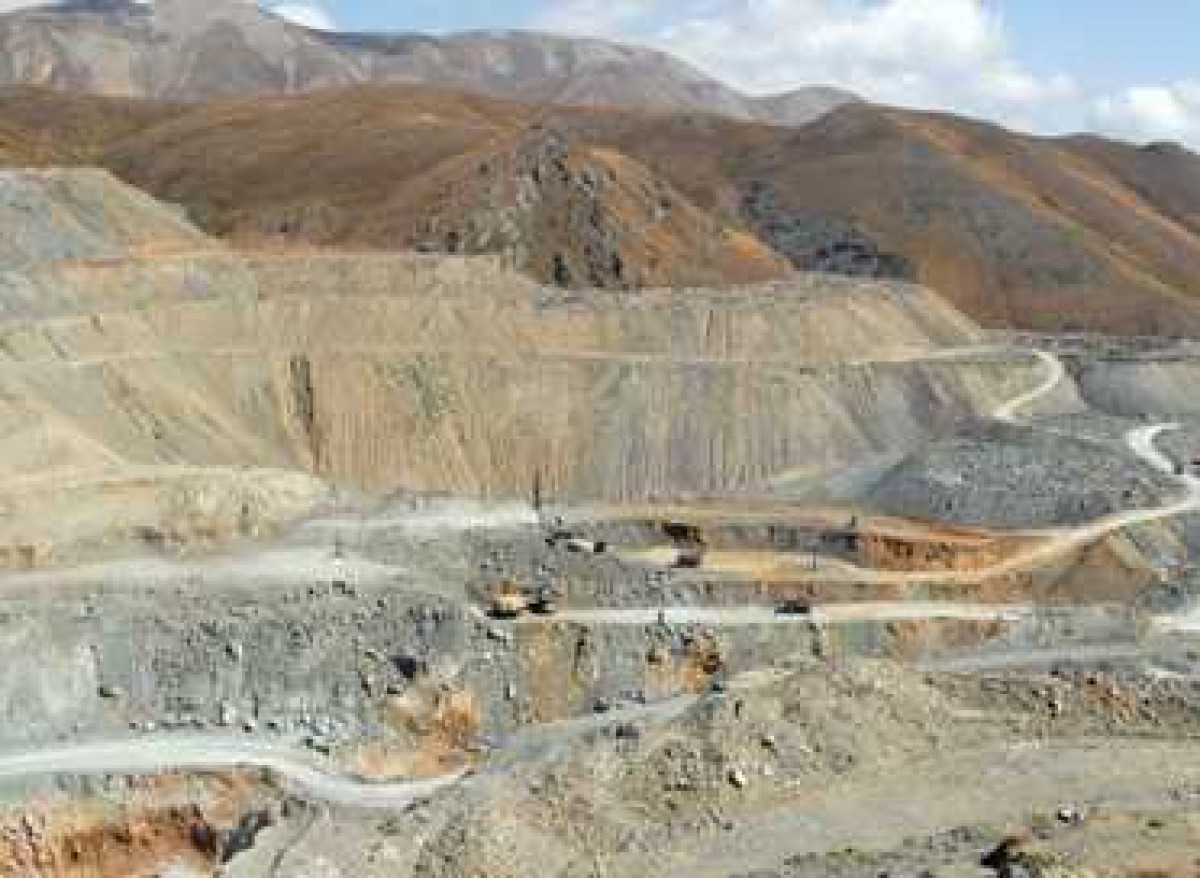
Armenia’s Mining Industry Will Be Seriously Affected by the War
The mining sector is one of the main driving forces of the national economy of the Republic of Armenia. The country is rich in iron, copper, molybdenum, lead, zinc, gold, silver, antimony, and aluminum. According to the state registry, 670 mineral deposits (including more than 25 metal mines) are currently recorded in the country.
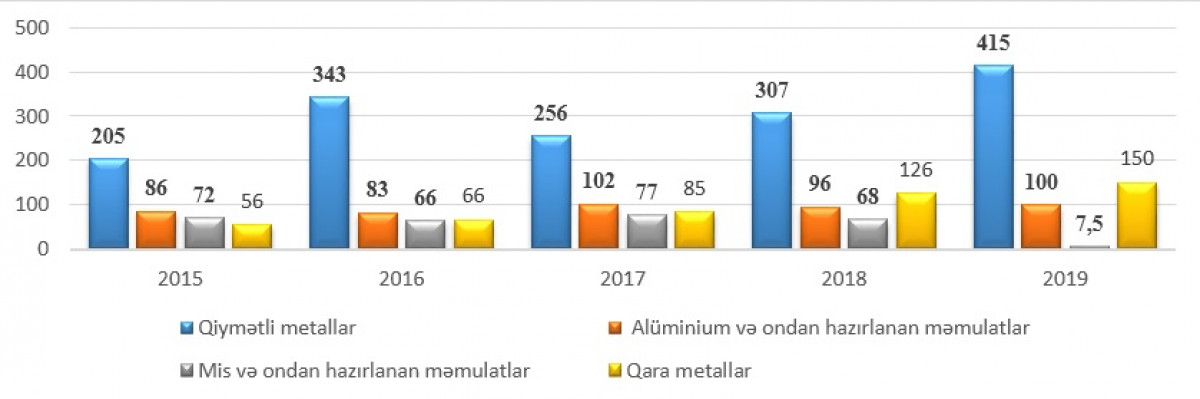
In 2019, the mining industry accounted for 2.8% of Armenia’s GDP. In addition, this sector represents a significant share of the country’s exports. Armenia’s total exports in 2019 amounted to USD 2.6 billion, of which 16%—approximately USD 415 million—came from precious and semi-precious stones, precious metals, and related products. The main export categories included gold under HS code 710813 in semi-processed forms such as bars, wires, profiles, plates, and sheets.
In the same year, exports of copper and related products declined, while aluminum and its products accounted for around USD 100 million. Exports of ferrous metals amounted to approximately USD 150 million.
Precious and semi-precious metals and related products account for more than one quarter of Armenia’s total exports. Over the past five years, the mining sector has generated an average annual foreign currency inflow exceeding USD 500 million, highlighting its strategic importance for the country’s economy. This also explains why Switzerland, after Russia, has become one of Armenia’s key export partners. Production of metal ores and concentrates accounts for approximately 98% of the sector’s total output value.
Following Armenia’s military aggression against Azerbaijan on 27 September, the counteroffensive launched by the Azerbaijani Armed Forces has accelerated the decline of Armenia’s mining industry. In particular, the complete suspension of operations at the Sotk gold mine, located on the border with Azerbaijan, is expected to significantly impact overall mining output in the country.
It should be noted that Sotk is Armenia’s largest gold mine and is located near the border with Azerbaijan. The Armenian side has also been illegally exploiting the Zod gold deposit located in Azerbaijani territory. Following the liberation of the Murovdag highlands by the Azerbaijani Armed Forces, Armenia immediately announced the suspension of operations at the Sotk mine. In addition, the start of military mobilization has slowed operations in other mining sites, as the workforce in this sector is predominantly male and has been called up for military service.
Preliminary estimates suggest that over the course of three weeks of ongoing conflict, Armenia’s economy has incurred losses exceeding USD 20 million solely due to disruptions in the mining sector. This decline is also expected to significantly reduce export revenues from the industry. Furthermore, mining companies are among the country’s largest taxpayers, meaning that reduced production will also negatively affect Armenia’s state budget revenues.
Related news

A representative of the CAERC participated in a conference dedicated to the future…
Rashad Najafli, Deputy Director of the Economic Analysis Department of the Center for Analysis of Economic Reforms and Communication (CAERC), participated in the international conference on “New Challenges in Maintaining Financial…

New Opportunities in Technology Parks: Commercialization and Export of Innovations
The Decree of the President of the Republic of Azerbaijan dated October 22, 2026 on Amendments to the “Model Regulation on Technology Parks” provides for important innovations in terms of improving the activities of technoparks,…

Vusal Gasimli spoke at the opening of the Islamic Finance Forum
Vusal Gasimli, Executive Director of the Center for Analysis of Economic Reforms and Communication (CAERC) — a Doctor of Economic Sciences and Professor — delivered a speech at the opening ceremony of the "3rd Islamic…

CAERC expands cooperation with think tanks and universities in Uzbekistan
Ilyas Huseynov, Head of the Turkic World Research Center (TWRC) at the Center for Analysis of Economic Reforms and Communication (CAERC), held meetings with representatives from think tanks and higher education institutions, and delivered…

Meetings regarding preparations for the final monitoring and evaluation of the Socio-Economic…
The Center for Analysis of Economic Reforms and Communication (CAERC) has concluded a series of meetings with representatives from relevant government agencies. These meetings were held to refine outcome indicators for the year 2026—within…

The investment portfolio of “Enterprise Azerbaijan”’s partners exceeds 3 billion…
The global innovation program “Startup School 4: Five Continents – 500 Startups,” implemented by the “Enterprise Azerbaijan” portal of the Center for Analysis of Economic Reforms and Communication (CAERC),…

The establishment of the Karabakh National Park creates new opportunities for ecological…
The Order of the President of the Republic of Azerbaijan, Ilham Aliyev, dated October 20, 2026, "On the Establishment of the Karabakh National Park of the Republic of Azerbaijan," is regarded as a significant step toward…

World Bank: Azerbaijan’s strong financial buffers support economic stability and…
The "Europe and Central Asia Economic Update" and the "Macro-Poverty Outlook" for Azerbaijan, published by the World Bank in October 2026, indicate that the country has maintained its macroeconomic stability, strong…
Op-eds
Ilkin Gasimov
Chief advisor of the Economic analysis division
New Financial Model for Resource Allocation in General Education
Baghish Ahmadov
Advisor to the Executive director of the Center for Analysis of Economic Reforms and Communication
Azerbaijan International Investment Forum: Investment Cooperation and National Development Priorities
Abdulrahim Dadashov
Deputy head of the Monitoring and evaluation division
Environmental Responsibility is One of the Key Conditions in the Development of the Mining Industry
Latif Zeynalli
Head of State Programs Division
Development of Competition Will Create New Opportunities for Sustainable Economic Growth
Orkhan Sadigov
Head of the Monitoring and evaluation division
A New Approach to Managing Off-Budget Funds Will Strengthen Financial Discipline
Elshan Yusifli
Head of the Monitoring of sectoral programs sector
New Changes to Nakhchivan’s State Programme: Export, Logistics and Social Mechanisms Improved
Abdulrahim Dadashov
Deputy head of the Monitoring and evaluation division
New Law Strengthens the Sustainable Development and Digital Monitoring of the Fisheries Sector