
Azerbaijan Becomes the Most Frequently Cited Country Case Study in a World Bank Report
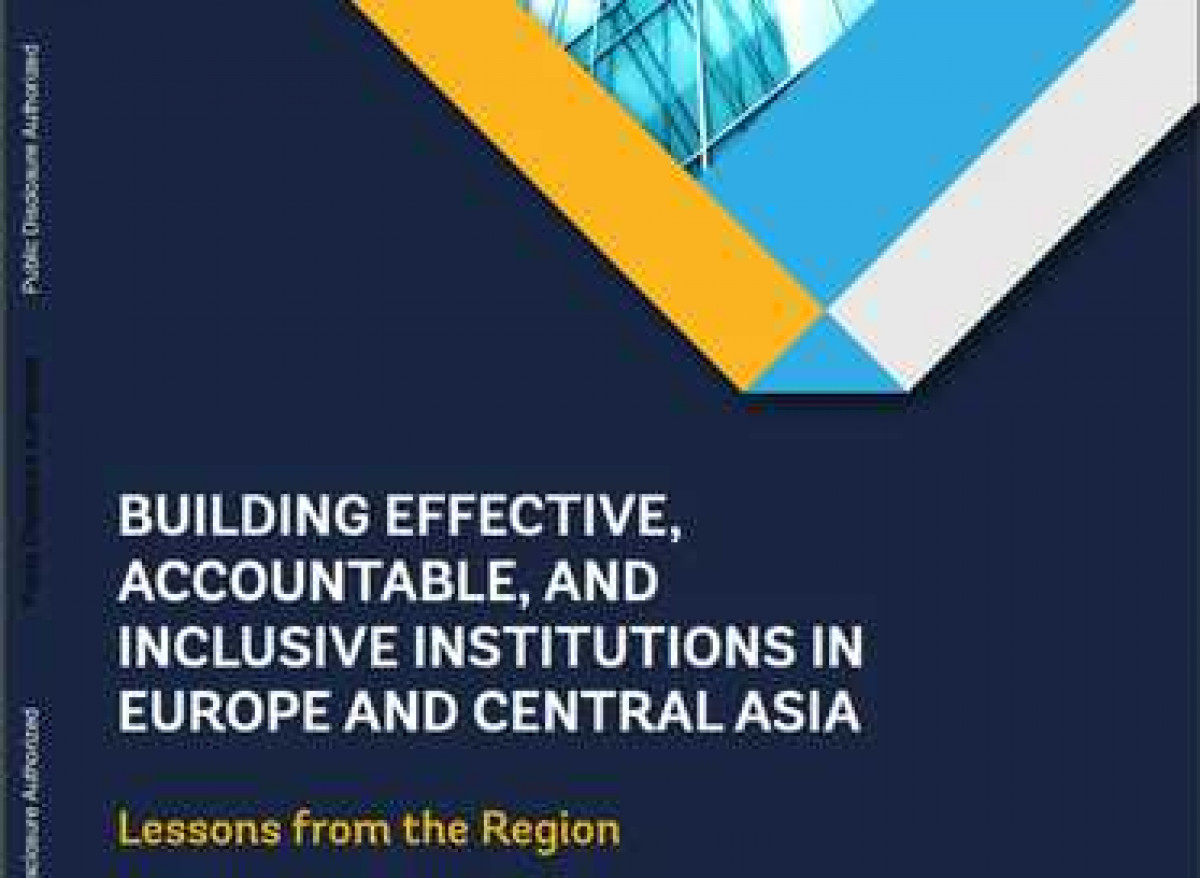
The World Bank has published a report titled “Building Effective, Accountable, and Inclusive Institutions in Europe and Central Asia.” According to the report, Azerbaijan has been the most frequently cited country case study in the Europe and Central Asia region covered by the study.
Azerbaijan’s experience has been extensively analyzed across three key sections of the report: “Strengthening Public Policy Processes,” “Managing Service Delivery,” and “Drivers and Factors for Improving Policy Effectiveness.”
The report notes that under the leadership of President Ilham Aliyev, strategic roadmaps were adopted, an effective governance mechanism for managing reforms was established, and the country has repeatedly been ranked among the world’s leading reformers. It also highlights that Azerbaijan has created a model of “results-based good governance” by implementing innovative solutions in monitoring and evaluation.
It is further stated that the Center for Analysis of Economic Reforms and Communication (CAERC), established by the President, plays an important role in ensuring the inclusiveness of reforms through public-private dialogue.
The report also dedicates attention to judicial and legal reforms in Azerbaijan. It emphasizes that electronic systems introduced in courts can significantly improve efficiency monitoring and facilitate the development of e-decision and e-policy mechanisms. The “Court Pulse” system is described as only a small component of a broader advanced ICT infrastructure in the judiciary. The scientifically designed, quantitative management system applied in courts enables standardized and more efficient decision-making processes, covering key dimensions such as time, quality, cost efficiency, and productivity.
In addition, the report highlights Azerbaijan’s participation as an oil-rich country in international transparency initiatives in the extractive industries sector. It notes that such initiatives are essential for fostering stakeholder dialogue, increasing trust in government, and improving the investment climate.
The World Bank report can be accessed via the following link:
http://documents1.worldbank.org/curated/en/908641593696415869/pdf/Building-Effective-Accountable-and-Inclusive-Institutions-in-Europe-and-Central-Asia-Lessons-from-the-Region.pdf
Related news

A representative of the CAERC participated in a conference dedicated to the future…
Rashad Najafli, Deputy Director of the Economic Analysis Department of the Center for Analysis of Economic Reforms and Communication (CAERC), participated in the international conference on “New Challenges in Maintaining Financial…

New Opportunities in Technology Parks: Commercialization and Export of Innovations
The Decree of the President of the Republic of Azerbaijan dated October 22, 2026 on Amendments to the “Model Regulation on Technology Parks” provides for important innovations in terms of improving the activities of technoparks,…

Vusal Gasimli spoke at the opening of the Islamic Finance Forum
Vusal Gasimli, Executive Director of the Center for Analysis of Economic Reforms and Communication (CAERC) — a Doctor of Economic Sciences and Professor — delivered a speech at the opening ceremony of the "3rd Islamic…

CAERC expands cooperation with think tanks and universities in Uzbekistan
Ilyas Huseynov, Head of the Turkic World Research Center (TWRC) at the Center for Analysis of Economic Reforms and Communication (CAERC), held meetings with representatives from think tanks and higher education institutions, and delivered…

Meetings regarding preparations for the final monitoring and evaluation of the Socio-Economic…
The Center for Analysis of Economic Reforms and Communication (CAERC) has concluded a series of meetings with representatives from relevant government agencies. These meetings were held to refine outcome indicators for the year 2026—within…

The investment portfolio of “Enterprise Azerbaijan”’s partners exceeds 3 billion…
The global innovation program “Startup School 4: Five Continents – 500 Startups,” implemented by the “Enterprise Azerbaijan” portal of the Center for Analysis of Economic Reforms and Communication (CAERC),…

The establishment of the Karabakh National Park creates new opportunities for ecological…
The Order of the President of the Republic of Azerbaijan, Ilham Aliyev, dated October 20, 2026, "On the Establishment of the Karabakh National Park of the Republic of Azerbaijan," is regarded as a significant step toward…

World Bank: Azerbaijan’s strong financial buffers support economic stability and…
The "Europe and Central Asia Economic Update" and the "Macro-Poverty Outlook" for Azerbaijan, published by the World Bank in October 2026, indicate that the country has maintained its macroeconomic stability, strong…
Op-eds
Ilkin Gasimov
Chief advisor of the Economic analysis division
New Financial Model for Resource Allocation in General Education
Baghish Ahmadov
Advisor to the Executive director of the Center for Analysis of Economic Reforms and Communication
Azerbaijan International Investment Forum: Investment Cooperation and National Development Priorities
Abdulrahim Dadashov
Deputy head of the Monitoring and evaluation division
Environmental Responsibility is One of the Key Conditions in the Development of the Mining Industry
Latif Zeynalli
Head of State Programs Division
Development of Competition Will Create New Opportunities for Sustainable Economic Growth
Orkhan Sadigov
Head of the Monitoring and evaluation division
A New Approach to Managing Off-Budget Funds Will Strengthen Financial Discipline
Elshan Yusifli
Head of the Monitoring of sectoral programs sector
New Changes to Nakhchivan’s State Programme: Export, Logistics and Social Mechanisms Improved
Abdulrahim Dadashov
Deputy head of the Monitoring and evaluation division
New Law Strengthens the Sustainable Development and Digital Monitoring of the Fisheries Sector