
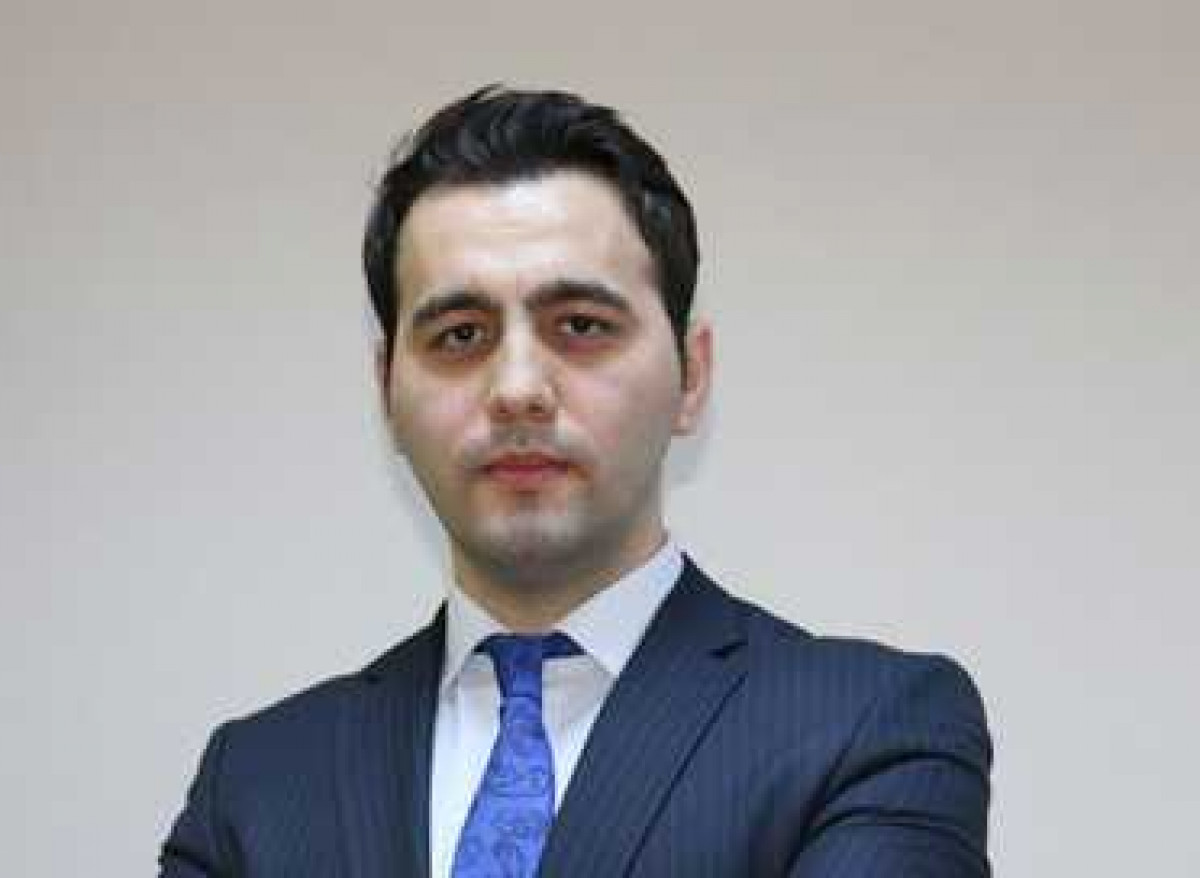
Ayaz Museyibov: Tax Incentives Are in the Interest of Business
Draft laws on amendments to the Tax Code of the Republic of Azerbaijan and the Law of the Republic of Azerbaijan on Social Insurance have been submitted to the Milli Majlis. What necessitated these changes?
– First of all, it should be noted that the pandemic has created a new economic environment in all countries and, naturally, new forms of economic relations have emerged under these conditions. In this context, each country has implemented fiscal response measures based on its economic capacity and capabilities, and in some cases with the support of external assistance. Azerbaijan, within the framework of its economic policy and relying on domestic resources, has taken mitigating response measures to minimize negative impacts. Comprehensive support measures for entrepreneurship, including small and medium-sized businesses, have already been implemented. As a continuation of these measures, it has been decided to introduce additional steps to reduce the tax and social insurance burden on business entities.
It should be particularly emphasized that some of the social insurance-related incentives and changes cover not only 2020, but also the period up to 2026. This reflects steps aimed at strategic governance principles and ensuring the medium-term stability of entrepreneurship and business. At the same time, the tax incentives and holidays provided also convey a message to economic entities: expectations include viewing their economic activity through the lens of “tax culture.”
How can Azerbaijan’s fiscal support program be assessed compared to international practice?
– Considering that Azerbaijan, as an oil-exporting country, has been exposed to a threefold fiscal pressure during the pandemic—namely, a decline in oil revenues, revenue losses due to fiscal easing, and a simultaneous increase in pandemic-related fiscal expenditures—the results are noteworthy. Despite this, the preservation of exchange rate stability of the national currency and the maintenance of overall macroeconomic stability demonstrate the effectiveness of the implemented support programs. Moreover, analysis of data presented by the International Monetary Fund shows that Azerbaijan holds a leading position in terms of the share of the anti-pandemic budget across a number of economic indicators.
What are the most important features of the new amendments to tax legislation?
– The core essence of these amendments is to preserve the flexibility of the tax system and tax administration during the pandemic by reducing the tax burden and granting administrative incentives and holidays, thereby ensuring the stable operation of business entities. For this purpose, a new chapter titled “Temporary Tax Regime” is added to the Code.
The temporary tax regime is defined as a special procedure for the calculation and payment of taxes for a certain period in relation to all or some business entities due to significant changes in economic conditions caused by natural disasters, epidemics, epizootics, major environmental or other accidents, as well as events in the global economic environment. Thus, during the pandemic, relations between entrepreneurs and the state will be formed under new rules. The new amendments include not only a reduction in financial burdens, but also the provision of tax holidays, which is of particular importance from the perspective of tax administration at this stage. For entities operating in areas covered by the temporary tax regime, the accrual of penalties for late tax payments as prescribed by the Code is suspended until 2021.
Could you provide more detailed information on the temporary tax regime?
– The concept of a special regime, interpreted in the Tax Code as a special procedure for tax calculation and payment for a certain period, existed previously. Unlike a permanent special tax regime, the temporary tax regime is a type of special regime applied for a limited period and within a defined scope. In the current context, it regulates tax rates, tax incentives and exemptions, tax payment deadlines, and issues related to the selection of a tax regime for taxpayers operating in pandemic-affected sectors, as well as micro-entrepreneurs subject to the simplified tax regime. This regime will be in force for one year and will apply retroactively from 1 January 2020.
Who will be able to benefit from the provisions of the new tax regime?
– A specific article is planned to be added to the Code regarding beneficiaries, detailed in Article 222.5. Since the main objective of the draft amendments is to minimize the negative effects of the pandemic, sectors affected by the pandemic are taken into account. These include domestic passenger transportation by road, including taxi services, tour operators and travel agencies, public catering, recreation and entertainment sectors, extracurricular education institutions, psychological centers, and other similar activities whose operations were restricted during the pandemic. Entrepreneurs operating in these fields will benefit from the new legislative provisions.
What exemptions and incentives are предусмотрed in relation to the tax burden?
– The incentives and exemptions cover a wide spectrum. For example, a 50 percent reduction in the simplified tax amount is предусмотрed for persons engaged in domestic passenger transportation by road, including taxi services. All business entities are granted full exemptions from property and land taxes, and a 75 percent tax incentive applies to generated profits. For public catering entities, the simplified tax rate is reduced by 50 percent—from 8 percent to 4 percent. Likewise, for simplified tax payers, the payable amount is reduced by 50 percent, from 2 percent to 1 percent.
During the temporary tax regime, imports of goods approved by the relevant executive authority to ensure public health and the supply of essential food products are exempt from VAT, providing additional financial support to the healthcare sector. Documented expenses incurred by taxpayers for necessary preventive measures, including disinfection, are fully deductible from income without limitation. In addition, aircraft used by air carriers for passenger transportation are exempt from property tax, and for entities operating under the temporary tax regime, withholding tax on leased real estate from individuals is reduced by 50 percent to 7 percent.
If entrepreneurs have already paid their tax liabilities in advance, how will the new incentives be applied?
– No one is excluded. The principle of inclusiveness is fully preserved. When applying the incentives, taxes already paid for the current year will be recalculated, and overpaid amounts will be credited toward future tax obligations, thereby reducing the overall tax burden on entrepreneurs.
What incentives are provided in terms of tax administration?
– Additional time is granted to entrepreneurs for reporting obligations, particularly in connection with activity restrictions during the pandemic, with special consideration for micro-entrepreneurs. These incentives apply to simplified tax, profit tax, income tax, and income from employment, covering both reporting deadlines and tax payment deadlines.
What are the key changes in the draft amendments to the Law on Social Insurance?
– Measures under the social insurance burden reduction support program will be implemented in two phases: some until 2021, others until 2026. Changes are envisaged in the registration of participants under compulsory state social insurance. Under current rules, insured persons earning income outside paid employment pay compulsory social insurance contributions equal to 50 percent of the minimum monthly wage in construction and trade, and 25 percent in other sectors. Under the new rules, differentiated regional tariffs are introduced: 100 percent in Baku, 90 percent in Sumgayit and Ganja, 80 percent in other cities, 60 percent in administrative centers of districts and settlements, and 50 percent in rural areas. In simple terms, social insurance incentives are further increased for regions and rural areas, providing additional support for regional entrepreneurship.
What are the main aspects of reducing the social insurance burden?
– The new draft law provides for significant reductions in compulsory state social insurance contributions, including regional differentiation and varying coefficients. New, substantially reduced tariffs are introduced for individuals engaged in self-employment without hired labor. For example, activities such as event hosting, musicianship, dancing, ashug performance, and entertainment services are subject to contributions of 5 percent of the minimum monthly wage; individual photo and audio-video services—5 percent; cobblers and repairers—3 percent; repair of watches, televisions, refrigerators, and other household appliances—3 percent; domestic services such as caregivers, nannies, drivers, gardeners, cooks, guards, and waitstaff—3 percent; painters’ workshops—3 percent; individual barbers and tailors—3 percent. Social insurance burdens for owners of agricultural land are also reduced through differentiated rates ranging from 2.6 to 10 percent of the minimum monthly wage, depending on land area.
You mentioned that social insurance changes cover two periods. Could you clarify this?
– Yes. Transitional provisions under Article 14.1 stipulate that until 2021, compulsory state social insurance rates will be applied on a special basis: 25 percent of the minimum monthly wage in construction and trade, and 15 percent in other sectors, alongside regional differentiation. From 2021 onward, rates of 50 percent and 25 percent, respectively, will apply, while maintaining differentiated regional tariffs. Overall, reductions in both tax and social insurance burdens represent a consistent continuation of substantial support measures aimed at preventing the recessionary effects of the pandemic.
Related news

A representative of the CAERC participated in a conference dedicated to the future…
Rashad Najafli, Deputy Director of the Economic Analysis Department of the Center for Analysis of Economic Reforms and Communication (CAERC), participated in the international conference on “New Challenges in Maintaining Financial…

New Opportunities in Technology Parks: Commercialization and Export of Innovations
The Decree of the President of the Republic of Azerbaijan dated October 22, 2026 on Amendments to the “Model Regulation on Technology Parks” provides for important innovations in terms of improving the activities of technoparks,…

Vusal Gasimli spoke at the opening of the Islamic Finance Forum
Vusal Gasimli, Executive Director of the Center for Analysis of Economic Reforms and Communication (CAERC) — a Doctor of Economic Sciences and Professor — delivered a speech at the opening ceremony of the "3rd Islamic…

CAERC expands cooperation with think tanks and universities in Uzbekistan
Ilyas Huseynov, Head of the Turkic World Research Center (TWRC) at the Center for Analysis of Economic Reforms and Communication (CAERC), held meetings with representatives from think tanks and higher education institutions, and delivered…

Meetings regarding preparations for the final monitoring and evaluation of the Socio-Economic…
The Center for Analysis of Economic Reforms and Communication (CAERC) has concluded a series of meetings with representatives from relevant government agencies. These meetings were held to refine outcome indicators for the year 2026—within…

The investment portfolio of “Enterprise Azerbaijan”’s partners exceeds 3 billion…
The global innovation program “Startup School 4: Five Continents – 500 Startups,” implemented by the “Enterprise Azerbaijan” portal of the Center for Analysis of Economic Reforms and Communication (CAERC),…

The establishment of the Karabakh National Park creates new opportunities for ecological…
The Order of the President of the Republic of Azerbaijan, Ilham Aliyev, dated October 20, 2026, "On the Establishment of the Karabakh National Park of the Republic of Azerbaijan," is regarded as a significant step toward…

World Bank: Azerbaijan’s strong financial buffers support economic stability and…
The "Europe and Central Asia Economic Update" and the "Macro-Poverty Outlook" for Azerbaijan, published by the World Bank in October 2026, indicate that the country has maintained its macroeconomic stability, strong…
Op-eds
Ilkin Gasimov
Chief advisor of the Economic analysis division
New Financial Model for Resource Allocation in General Education
Baghish Ahmadov
Advisor to the Executive director of the Center for Analysis of Economic Reforms and Communication
Azerbaijan International Investment Forum: Investment Cooperation and National Development Priorities
Abdulrahim Dadashov
Deputy head of the Monitoring and evaluation division
Environmental Responsibility is One of the Key Conditions in the Development of the Mining Industry
Latif Zeynalli
Head of State Programs Division
Development of Competition Will Create New Opportunities for Sustainable Economic Growth
Orkhan Sadigov
Head of the Monitoring and evaluation division
A New Approach to Managing Off-Budget Funds Will Strengthen Financial Discipline
Elshan Yusifli
Head of the Monitoring of sectoral programs sector
New Changes to Nakhchivan’s State Programme: Export, Logistics and Social Mechanisms Improved
Abdulrahim Dadashov
Deputy head of the Monitoring and evaluation division
New Law Strengthens the Sustainable Development and Digital Monitoring of the Fisheries Sector