
The Center for Analysis of Economic Reforms and Communication Launches Public Lectures
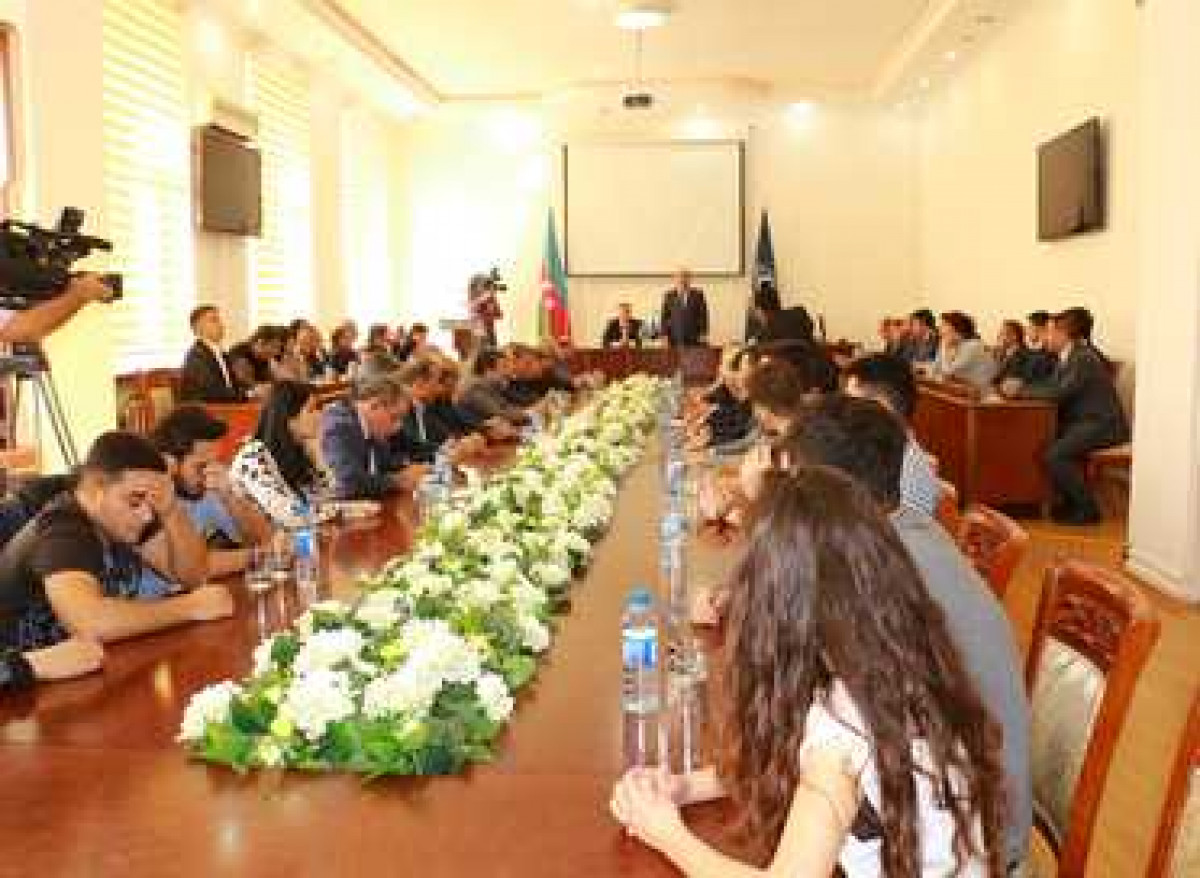
The Center for Analysis of Economic Reforms and Communication (CAERC) of the Republic of Azerbaijan has launched a series of public lectures dedicated to the country’s successful economic reforms at leading universities. As part of this initiative, the Executive Director of CAERC, Vusal Gasimli, delivered the first lecture at the Azerbaijan State University of Economics (UNEC).
At the beginning of the event, UNEC Rector, Professor Adalat Muradov, welcomed the faculty and students. Professor Muradov noted that as a result of the socio-economic reforms successfully implemented between 2004 and 2014, Azerbaijan ranked among the top countries in terms of economic growth rate. Revenues from oil were used to modernize infrastructure, develop the non-oil economy, improve social welfare, and create strategic foreign currency reserves exceeding GDP. However, starting from 2014, the sharp decline in oil prices and economic crises in partner countries slowed down economic growth, created institutional and structural challenges, and affected the financial and banking sector. This situation necessitated a transition to a new approach to economic development, leading to the preparation of 12 Strategic Road Maps covering the national economy and 11 key sectors. The Rector highlighted the projects implemented under these Strategic Road Maps and emphasized that UNEC aims to support evidence-based economic reforms and expand research contributing to economic growth. He also stressed that UNEC provides maximum opportunities to fully realize the university’s potential.
Following this, Vusal Gasimli presented his lecture. He emphasized that under the leadership of President Ilham Aliyev, comprehensive economic reforms have helped overcome challenges caused by external shocks. During the first nine months of the year, the non-oil sector grew by 2.5%, non-oil industry by 3.1%, agriculture by 2.8%, and foreign trade turnover increased by 7%, with non-oil exports reaching USD 1.07 billion. “According to IMF forecasts, despite a slowdown in the oil sector, the overall economy is expected to grow by 2% next year. The growth rate of Azerbaijan’s non-oil sector is projected to exceed the global average. Economic reforms and the establishment of industrial, agricultural, and technoparks indicate a boom in the non-oil sector in 2018. Commercial banks are increasingly participating in the financing of the real sector. The state investment program will also support economic development, ensuring rapid growth in the non-oil sector in 2018,” he added.
At the end of the lecture, V. Gasimli responded to questions from UNEC faculty and students, noting that such public lectures play an important role in creating a synthesis of education, research, and reform initiatives.
Related news

A representative of the CAERC participated in a conference dedicated to the future…
Rashad Najafli, Deputy Director of the Economic Analysis Department of the Center for Analysis of Economic Reforms and Communication (CAERC), participated in the international conference on “New Challenges in Maintaining Financial…

New Opportunities in Technology Parks: Commercialization and Export of Innovations
The Decree of the President of the Republic of Azerbaijan dated October 22, 2026 on Amendments to the “Model Regulation on Technology Parks” provides for important innovations in terms of improving the activities of technoparks,…

Vusal Gasimli spoke at the opening of the Islamic Finance Forum
Vusal Gasimli, Executive Director of the Center for Analysis of Economic Reforms and Communication (CAERC) — a Doctor of Economic Sciences and Professor — delivered a speech at the opening ceremony of the "3rd Islamic…

CAERC expands cooperation with think tanks and universities in Uzbekistan
Ilyas Huseynov, Head of the Turkic World Research Center (TWRC) at the Center for Analysis of Economic Reforms and Communication (CAERC), held meetings with representatives from think tanks and higher education institutions, and delivered…

Meetings regarding preparations for the final monitoring and evaluation of the Socio-Economic…
The Center for Analysis of Economic Reforms and Communication (CAERC) has concluded a series of meetings with representatives from relevant government agencies. These meetings were held to refine outcome indicators for the year 2026—within…

The investment portfolio of “Enterprise Azerbaijan”’s partners exceeds 3 billion…
The global innovation program “Startup School 4: Five Continents – 500 Startups,” implemented by the “Enterprise Azerbaijan” portal of the Center for Analysis of Economic Reforms and Communication (CAERC),…

The establishment of the Karabakh National Park creates new opportunities for ecological…
The Order of the President of the Republic of Azerbaijan, Ilham Aliyev, dated October 20, 2026, "On the Establishment of the Karabakh National Park of the Republic of Azerbaijan," is regarded as a significant step toward…

World Bank: Azerbaijan’s strong financial buffers support economic stability and…
The "Europe and Central Asia Economic Update" and the "Macro-Poverty Outlook" for Azerbaijan, published by the World Bank in October 2026, indicate that the country has maintained its macroeconomic stability, strong…
Op-eds
Ilkin Gasimov
Chief advisor of the Economic analysis division
New Financial Model for Resource Allocation in General Education
Baghish Ahmadov
Advisor to the Executive director of the Center for Analysis of Economic Reforms and Communication
Azerbaijan International Investment Forum: Investment Cooperation and National Development Priorities
Abdulrahim Dadashov
Deputy head of the Monitoring and evaluation division
Environmental Responsibility is One of the Key Conditions in the Development of the Mining Industry
Latif Zeynalli
Head of State Programs Division
Development of Competition Will Create New Opportunities for Sustainable Economic Growth
Orkhan Sadigov
Head of the Monitoring and evaluation division
A New Approach to Managing Off-Budget Funds Will Strengthen Financial Discipline
Elshan Yusifli
Head of the Monitoring of sectoral programs sector
New Changes to Nakhchivan’s State Programme: Export, Logistics and Social Mechanisms Improved
Abdulrahim Dadashov
Deputy head of the Monitoring and evaluation division
New Law Strengthens the Sustainable Development and Digital Monitoring of the Fisheries Sector