
Familiarization Tour on the Implementation of the “Electronic Court” Information System
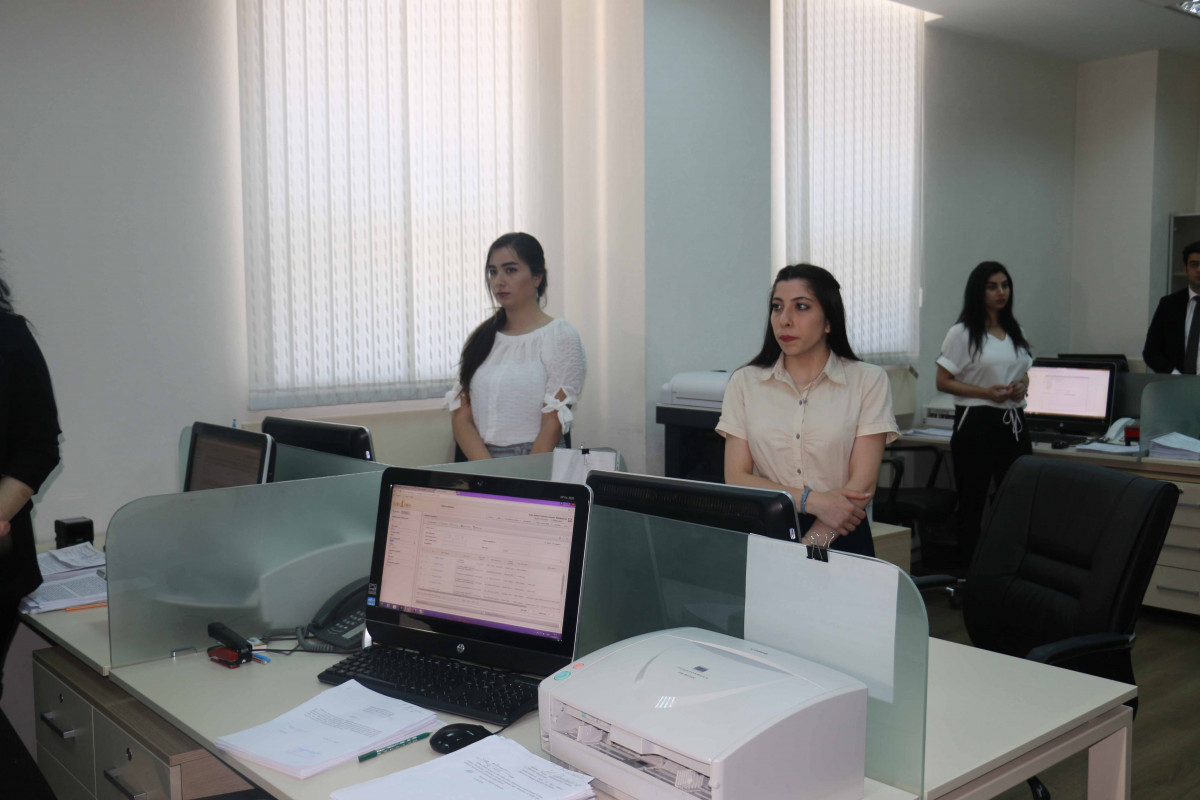
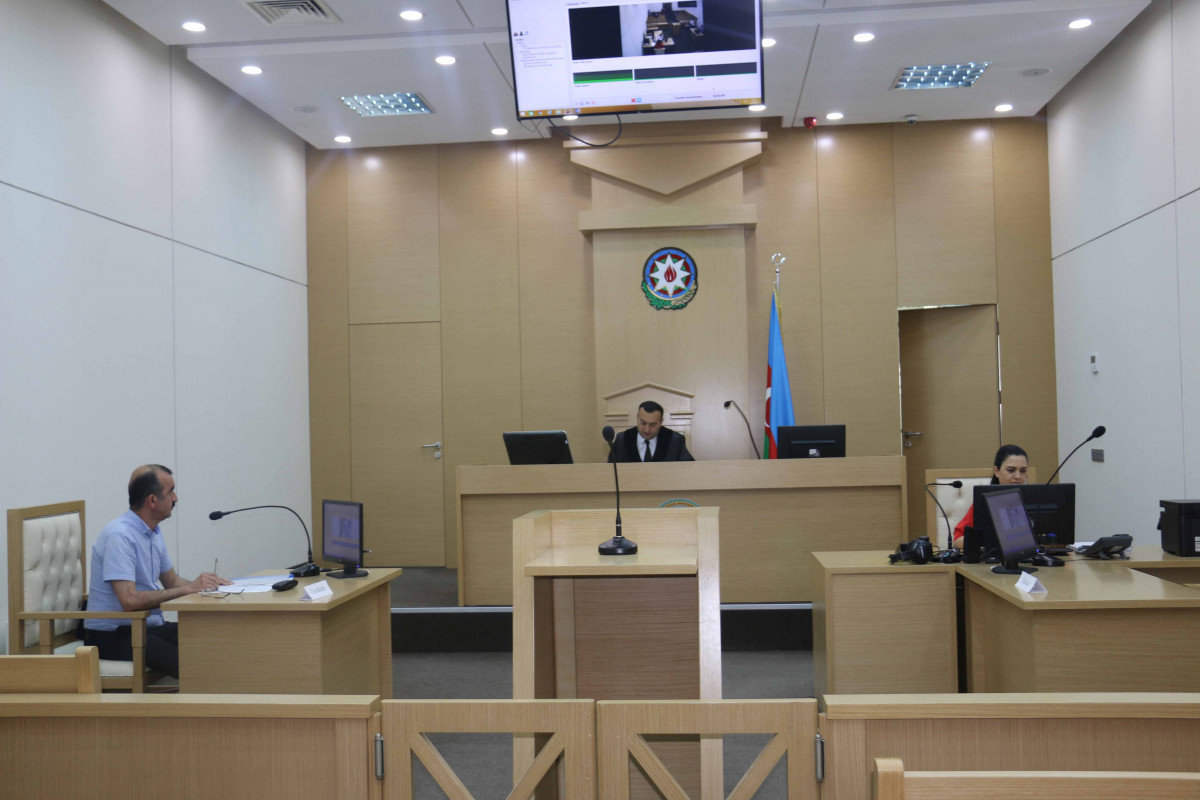
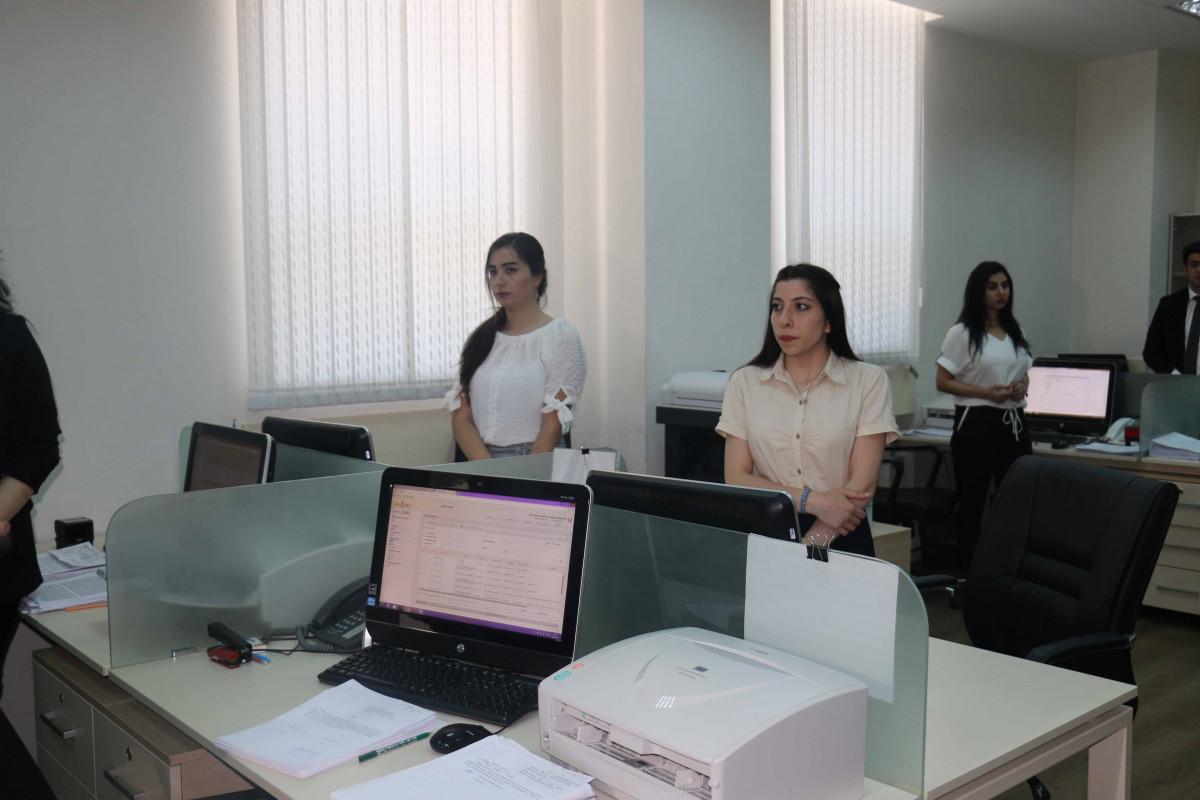
The Ministry of Justice, together with the “Electronic Court” Working Group and the Center for Analysis of Economic Reforms and Communication (CAERC), organized a familiarization tour for media representatives to present the implementation of the “Electronic Court” information system and the new standards for court buildings.
Significant measures have been undertaken in Azerbaijan to facilitate access to courts for individuals and legal entities, increase transparency within the system, accelerate court procedures, and substantially reduce the workload of judges handling civil cases. All these measures have contributed to improving the efficiency of the judicial system.
Within these efforts, the newly established Sabunchu Court Complex, serving a population of 1.3 million, was inaugurated on October 21, 2015, with the participation of the President of the Republic of Azerbaijan. The complex houses the 2nd Baku Economic-Administrative Court, Sabunchu District Court of Baku City, and the Sabunchu District Enforcement and Probation Office. The building provides working conditions for 21 judges, 30 enforcement officers, and over 100 court staff members.
Ramin Gurbanov, head of the “Electronic Court” Working Group and a judge, noted that for the first time in the history of Azerbaijan’s judicial system, progressive standards for court buildings have been developed and applied in this complex. One such standard is the principle of zonal division within the building (administrative and public zones), which has increased judges’ productivity by 15% and limited non-procedural interactions with citizens. Moreover, consolidating multiple courts and justice bodies within a single building has resulted in investment savings and reduced subsequent maintenance costs.
The new court buildings provide full accessibility for visually or physically impaired citizens, including specialized flooring and signage in public zones indicating all rooms. Modern electronic information devices allow citizens to obtain information on court processes, schedules, courtrooms, judges, and other related matters without obstacles.
All necessary infrastructure for the implementation of the “Electronic Court” has been established in the court complex. The “AZ-Femida” system has been installed in courtrooms for accurate and rapid audio-video recording of proceedings. Equipment for videoconferencing, presentations, electronic document circulation, and court case management has been set up. Special glass rooms have been allocated for detainees to communicate directly with their lawyers, and designated areas have been created for translation services during proceedings involving foreign participants.
Following the Presidential Decree of February 13, 2014, significant work was completed in a short period to create the “Electronic Court” information system to ensure transparency, effective protection of human and civil rights, and efficiency in judicial processes. This includes a unified web portal for the judiciary, participants’ “Personal Cabinets,” electronic payment systems for court fees, a unified registry, a centralized database of court decisions, electronic signatures for judges, electronic case management, an automated system for case allocation among judges, and an “Electronic Enforcement Order” system.
As of September 1, 2017, nearly 4,000 electronic claims have been submitted to the Sabunchu District Court through the “Electronic Enforcement Order” system by banks, credit organizations, mobile operators, and other entities via their “Electronic Cabinets.” Additionally, a fully paperless exchange between courts and enforcement agencies has been established.
During the tour, it was emphasized that thanks to successful economic reforms led by President Ilham Aliyev, Azerbaijan advanced 8 positions in the World Bank’s “Doing Business 2018” report compared to 2017, ranking 57th out of 190 countries and becoming one of the top three reformist countries in the Europe and Central Asia region. Continuous reforms have led to significant improvements in the “Enforcing Contracts” indicator, with over 61 legal entities and entrepreneurs now submitting electronic applications to general jurisdiction courts for disputes arising from unfulfilled contractual obligations. These electronic procedures account for more than 50% of civil cases in the automated court management system. Furthermore, all administrative and economic court decisions are now published on the electronic portal. Collectively, these innovations are expected to further improve Azerbaijan’s position in the “Contract Enforcement” indicator in the “Doing Business 2019” ranking, enhancing the “Quality of Judicial Processes” index.
Related news

"Certificate of Free Sale" Issued by "Azexport" Portal Fully…
The planned works within the framework of cooperation between the "Azexport" portal, operated by the Center for Analysis of Economic Reforms and Communication (CAERC), and the "Digital Logistics Platform" (DLP)…

State Program for 2027–2030 on the Development of the Mining and Metallurgical Industry…
President Ilham Aliyev has signed an Order on approving the "State Program for 2027–2030 on the Development of the Mining (Metal Ores) and Metallurgical Industry in the Republic of Azerbaijan." The Cabinet of Ministers…

Environmental Responsibility is One of the Key Conditions in the Development of…
At the meeting chaired by the President of the Republic of Azerbaijan, Ilham Aliyev, dedicated to the "State Program for 2027–2030 on the Development of the Mining (Metal Ores) and Metallurgical Industry in the Republic…

Development of the Mining and Metallurgical Industry Forms a New Human Capital Agenda…
The main directions for the new development phase of the industry were presented at the meeting held on September 22 under the chairmanship of the President of the Republic of Azerbaijan, Ilham Aliyev, dedicated to the "State…

A New Stage in the Development of the Mining and Metallurgical Industry
The meeting chaired by President Ilham Aliyev dedicated to the “State Program on the Development of the Mining (Metal Ores) and Metallurgical Industry in the Republic of Azerbaijan for 2027–2030” identified important…

Meeting Held with Authors from AQTA on the Preparation of the “Food Safety” Textbook
Work on the “Food Safety” textbook, being prepared within the framework of cooperation between the Center for Analysis of Economic Reforms and Communication (CAERC) and the Azerbaijan Food Safety Agency (AFSA), is ongoing.…

“Economic Reforms” Journal Added to German Academic Library Catalogues
The scientific and analytical journal “Economic Reforms”, established by the Center for Analysis of Economic Reforms and Communication (CAERC), is expanding its presence in the international academic information space.…

Cooperation Issues Discussed between CAERC and the Islamic Development Bank
Vusal Gasimli, Executive Director of the Center for Analysis of Economic Reforms and Communication (CAERC), met with representatives of the evaluation mission of the Islamic Development Bank (IsDB) Group. The meeting was attended…
Op-eds
Aykhan Gadashov
Head of the Azexport portal
“Geoeconomic Stability Corridor”: The $1 Billion Trade Target with Uzbekistan Opens New Horizons for Business
Isa Gasimov
Head of the “Enterprise Azerbaijan” portal
Crowdfunding: New Perspectives in Startup Financing in Azerbaijan
Elnur Alakbarov
Deputy head of the Economic analysis division
New Action Plan on Employment: Digitalization and Result-Oriented Management
Abdulrahim Dadashov
Deputy head of the Monitoring and evaluation division
Agricultural support mechanisms will create new opportunities for farmers and exporters
Ilyas Huseynov
Head of the Turkic World Research Center
Large-Scale Modernization of the Baku-Tbilisi-Kars Railway: A New Strategic Phase in the Middle Corridor and Eurasian Connectivity
Rashad Najafli
Deputy head of the Economic analysis division
Azerbaijan: A Guarantor of Peace and Security in the South Caucasus
Isa Gasimov
Head of the “Enterprise Azerbaijan” portal
Transition to an Innovation Ecosystem: Azerbaijan’s Strategic Choice