
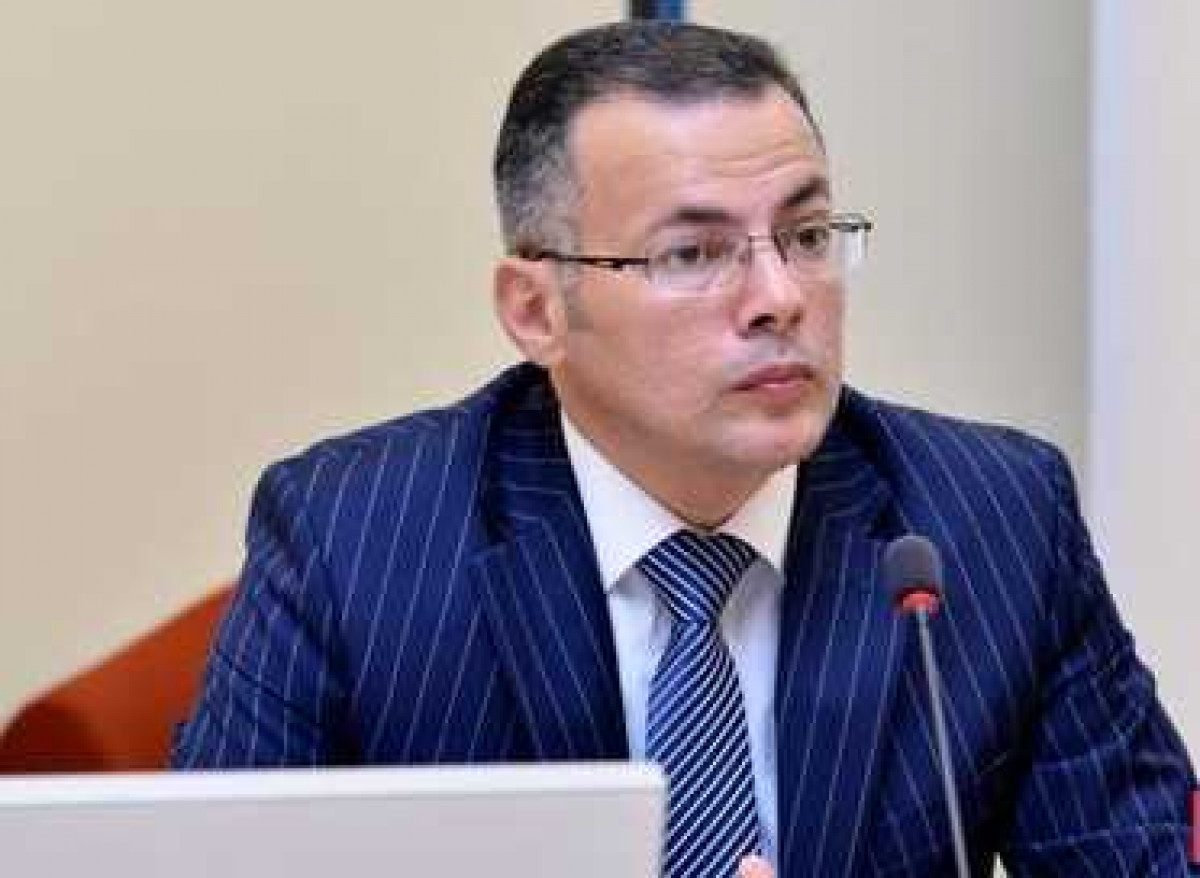
Vusal Gasimli: Capital and Property Amnesty Under Consideration
The implementation of a capital and property amnesty is being considered in Azerbaijan. Vusal Gasimli, Executive Director of the Center for Analysis of Economic Reforms and Communication (CAERC), stated that the goal is to broaden financial sources for economic growth and investment:
“In Azerbaijan, elements of amnesty have existed in economic policy before. The law approved by President Ilham Aliyev, ‘On the Regulation of Tax Debts Existing as of January 1, 2017,’ could in fact be considered a form of tax amnesty to some extent. Under this law, debts related to interest and financial sanctions were waived. Globally, different types of amnesties and their successful or unsuccessful outcomes can be observed. In Russia, under two amnesties announced from 2015 onward, €10 billion was declared, while the results of the third amnesty, which ended this March, have not yet been disclosed. Income and capital amnesties have been conducted five times in India, four times in Portugal, and twice in France, Austria, and Ireland. Worldwide, capital, property, tax, and income amnesties have met expectations to varying degrees.”
Gasimli explained that by comparing entrepreneurs’ reports submitted to tax, statistics, and other government agencies, as well as reconciling household income and expenditures, the contours of the “unobserved economy” become visible:
“Effective measures by tax and customs authorities against the ‘shadow economy’ in 2019 brought an additional AZN 1 billion into the budget beyond projections. According to official figures, the unobserved economy accounts for 8.7% of Azerbaijan’s GDP. Analysis of disposable income shows that annual savings in the country amount to AZN 20–25 billion. Therefore, although precise estimation is difficult, a capital and property amnesty could potentially legalize a significant sum. In fact, a capital and property amnesty could be seen as a logical continuation of efforts to combat the ‘shadow economy.’ Especially, recent changes to the Tax Code incentivize entrepreneurs, both administratively and through encouragement, to ‘whitewash’ their businesses.”
According to Gasimli, international experience shows that the legalization of capital must align with the interests of its owners:
“Specifically, the return on equity (ROE) should be at a level where legalizing the capital increases the opportunity to earn net income. If the opportunity cost is favorable, the amnesty will attract capital owners to legalize their assets. Currently, with stock values declining worldwide, investors say ‘cash is king.’ This presents an opportunity for cash holdings to lean toward legalization. In March this year, some holders of over AZN 20,000 chose to declare their assets to the Financial Monitoring Service rather than convert them to dollars. Amnesty could also appeal to such capital holders.”
“Of course, as a developing country, there are factors that make a capital and property amnesty more challenging in Azerbaijan,” Gasimli added. “For example, since the start of the pandemic, $90 billion in investments have left developing countries.”
Gasimli noted that Azerbaijan’s participation in international transparency initiatives also makes conditions favorable for such an amnesty:
“Azerbaijan is a member of the Egmont Group of financial monitoring authorities, participates in MONEYVAL – the Committee of Experts on the Evaluation of Anti-Money Laundering Measures and the Financing of Terrorism of the Council of Europe – and cooperates with the Financial Action Task Force (FATF) of the Organization for Economic Cooperation and Development.”
Gasimli emphasized that legalized capital could result in increased investment, development of the securities market, revitalization of the banking sector, growth in cashless transactions, higher budget revenues, and greater economic activity:
“For this, the form, conditions, duration, objectives, and scope of the amnesty must be clearly defined, and, most importantly, mutual trust must be established. Capital and income amnesty should be implemented in a way that allows declared funds to be invested. For example, directing declared capital to construction currently has a strong multiplier effect. Declared funds can be channeled into the real economy through banks, investment funds, market maker institutions, investment companies, stock exchanges, fintechs, investment banks, industrial parks, agro-parks, tech parks, and other channels.”
Related news

A representative of the CAERC participated in a conference dedicated to the future…
Rashad Najafli, Deputy Director of the Economic Analysis Department of the Center for Analysis of Economic Reforms and Communication (CAERC), participated in the international conference on “New Challenges in Maintaining Financial…

New Opportunities in Technology Parks: Commercialization and Export of Innovations
The Decree of the President of the Republic of Azerbaijan dated October 22, 2026 on Amendments to the “Model Regulation on Technology Parks” provides for important innovations in terms of improving the activities of technoparks,…

Vusal Gasimli spoke at the opening of the Islamic Finance Forum
Vusal Gasimli, Executive Director of the Center for Analysis of Economic Reforms and Communication (CAERC) — a Doctor of Economic Sciences and Professor — delivered a speech at the opening ceremony of the "3rd Islamic…

CAERC expands cooperation with think tanks and universities in Uzbekistan
Ilyas Huseynov, Head of the Turkic World Research Center (TWRC) at the Center for Analysis of Economic Reforms and Communication (CAERC), held meetings with representatives from think tanks and higher education institutions, and delivered…

Meetings regarding preparations for the final monitoring and evaluation of the Socio-Economic…
The Center for Analysis of Economic Reforms and Communication (CAERC) has concluded a series of meetings with representatives from relevant government agencies. These meetings were held to refine outcome indicators for the year 2026—within…

The investment portfolio of “Enterprise Azerbaijan”’s partners exceeds 3 billion…
The global innovation program “Startup School 4: Five Continents – 500 Startups,” implemented by the “Enterprise Azerbaijan” portal of the Center for Analysis of Economic Reforms and Communication (CAERC),…

The establishment of the Karabakh National Park creates new opportunities for ecological…
The Order of the President of the Republic of Azerbaijan, Ilham Aliyev, dated October 20, 2026, "On the Establishment of the Karabakh National Park of the Republic of Azerbaijan," is regarded as a significant step toward…

World Bank: Azerbaijan’s strong financial buffers support economic stability and…
The "Europe and Central Asia Economic Update" and the "Macro-Poverty Outlook" for Azerbaijan, published by the World Bank in October 2026, indicate that the country has maintained its macroeconomic stability, strong…
Op-eds
Ilkin Gasimov
Chief advisor of the Economic analysis division
New Financial Model for Resource Allocation in General Education
Baghish Ahmadov
Advisor to the Executive director of the Center for Analysis of Economic Reforms and Communication
Azerbaijan International Investment Forum: Investment Cooperation and National Development Priorities
Abdulrahim Dadashov
Deputy head of the Monitoring and evaluation division
Environmental Responsibility is One of the Key Conditions in the Development of the Mining Industry
Latif Zeynalli
Head of State Programs Division
Development of Competition Will Create New Opportunities for Sustainable Economic Growth
Orkhan Sadigov
Head of the Monitoring and evaluation division
A New Approach to Managing Off-Budget Funds Will Strengthen Financial Discipline
Elshan Yusifli
Head of the Monitoring of sectoral programs sector
New Changes to Nakhchivan’s State Programme: Export, Logistics and Social Mechanisms Improved
Abdulrahim Dadashov
Deputy head of the Monitoring and evaluation division
New Law Strengthens the Sustainable Development and Digital Monitoring of the Fisheries Sector