
Contours of the Global Future: In which direction is the world changing towards 2036?
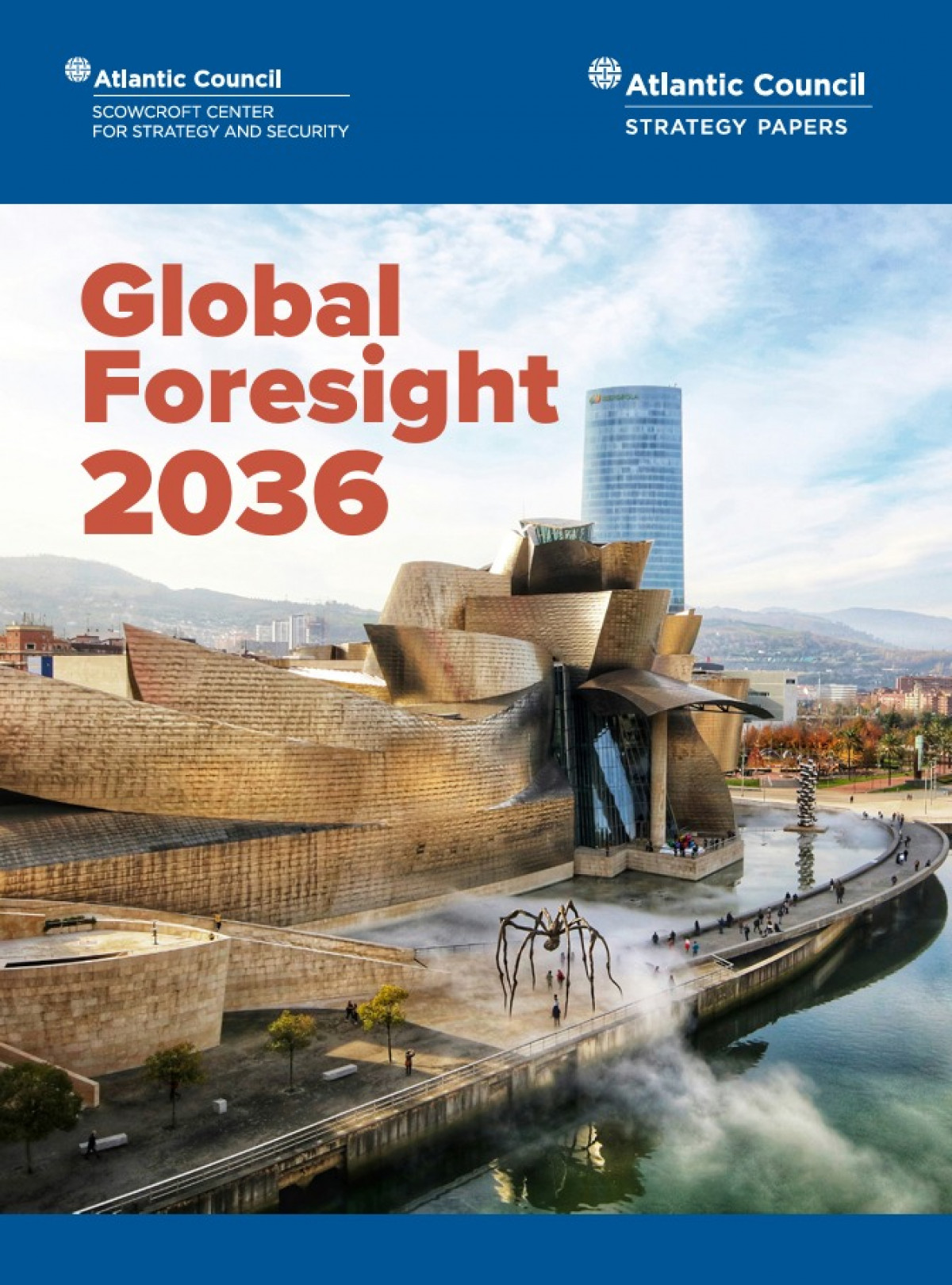
Rashad Najafli, Deputy Head of the Economic Analysis Department at the Center for Analysis of Economic Reforms and Communication (CAERC), has commented on the "Global Foresight 2036" report presented by the Atlantic Council, a prestigious international think tank. He stated that this report is not merely a collection of probabilities regarding the future, but also carries a "diagnostic" character, indicating the current direction of global strategic thinking. According to him, the survey, conducted with the participation of 447 geostrategists and foresight experts from 72 countries, clearly reveals the accumulating risks and the shifting balance of power in the international system. The results show that 63% of respondents believe the world will be in a worse state by 2036, while only 37% believe in a more positive scenario.
Rashad Najafli noted that a key point in the report is the evident shift in the global balance of power. The report clearly demonstrates a weakening of trust in global governance institutions. 71% of respondents believe that the influence of the United Nations will decline. Similarly, 65% expect the World Trade Organization, 50% the World Bank, and 41% the International Monetary Fund to lose their former weight in the global system. These figures indicate that the effectiveness and legitimacy of multilateral institutions formed in the 20th century are increasingly being called into question. According to the expert, these indicators signify a transformation in the global system that is not only institutional but also value-based.
Technological transformation, particularly the development of Artificial Intelligence (AI), is presented as one of the primary drivers of global change. According to the expert, 58% of respondents predict that AI will reach or even surpass human-level intelligence by 2036, suggesting that technology will have a profound impact not only on economic systems but also on social and governance structures in the coming decade. While 56% of respondents believe AI will create a generally positive impact, 32% think it could lead to negative consequences. Notably, the share of those who see the potential negative impact of technology on the economy as a major risk has risen from 6% to 14%. This dynamics shows that despite continued technological optimism, the perception of risks is growing rapidly, and approaches to AI's effects are becoming increasingly realistic.
The report also indicates a shift in global priorities regarding climate change. According to Najafli, only 17% of respondents evaluate climate change as a primary global risk, a significant decrease compared to previous years when this figure was approximately 30%. However, while the nature of climate-related risks is changing, their scale is not diminishing. More than 80% of respondents expect global temperature increases to exceed critical thresholds, and 64% note that conflicts over water resources could occur in the next decade. These figures suggest that climate change will continue to play a decisive role in the global security agenda through its indirect rather than direct impacts.
Rashad Najafli concluded that the "Global Foresight 2036" report clearly shows that the world is not just changing, but is entering a new phase. The reshaping of the global balance of power, increasing security risks, the loss of influence of international institutions, and the rapid emergence of technology as a dominant force are already defining the contours of a new world order. In this reality, the greatest challenge is not merely to follow the changes but to anticipate them. For states and think tanks, the core issue is to correctly interpret the changing global environment, identify risks in a timely manner, and formulate more agile, intelligent, and data-driven policy approaches.
Related news

The “Turkish Economic Review” issue covering the first half of 2026 has been published
The "Turkish Economic Review" for the first half of 2026 (January-June No. 2) published by the Center for Analysis of Economic Reforms and Communication (CERACC) in cooperation with the Secretariat of the Organization of…

Meeting Held with Representatives of "The Coca-Cola Company" at CAERC
A meeting was held at the Center for Analysis of Economic Reforms and Communication (CAERC) with a delegation from "The Coca-Cola Company." During the meeting, Vusal Gasimli, Executive Director of CAERC, briefed the delegation…

CAERC Will Create a New Module for Monitoring the State Program on the Mining and…
Prime Minister of the Republic of Azerbaijan Ali Asadov has signed an Order on ensuring the implementation of Order No. 1226 of the President of the Republic of Azerbaijan dated September 23, 2026, "On approving the 'State…

New Pharmaceutical Manufacturing Facility Opens New Opportunities for the Development…
The participation of President of the Republic of Azerbaijan Ilham Aliyev in the inauguration of the pharmaceutical manufacturing facility of "Gen Pharma Caucasus Manufacturing Operations" LLC in the Pirallahi Industrial…

CAERC Honored with Two Awards at the "International Finance Awards 2026"
The Center for Analysis of Economic Reforms and Communication (CAERC) has been honored with awards in two categories at the "International Finance Awards 2026," organized by the UK-based international media publication International…

Increasing Wages and Social Payments May Positively Impact Economic Activity
The statement by President Ilham Aliyev at the 8th Congress of the New Azerbaijan Party announcing that the minimum wage, pensions, and social allowances will be increased next year demonstrates that the social policy aimed at boosting…

Energy Security: Azerbaijan's Growing Role and New Opportunities
During his speech at the 8th Congress of the New Azerbaijan Party, President Ilham Aliyev emphasized Azerbaijan's expanding role in energy security, stating: "...rich in energy resources, Azerbaijan is turning into a very…

The Great Return at a New Stage: Sustainable Settlement and Economic Development
The restoration of the liberated territories and the return of former internally displaced persons (IDPs) to their native homelands are evaluated as an integral part of long-term socio-economic development. Under these circumstances,…
Op-eds
Ilkin Gasimov
Chief advisor of the Economic analysis division
New Financial Model for Resource Allocation in General Education
Baghish Ahmadov
Advisor to the Executive director of the Center for Analysis of Economic Reforms and Communication
Azerbaijan International Investment Forum: Investment Cooperation and National Development Priorities
Abdulrahim Dadashov
Deputy head of the Monitoring and evaluation division
Environmental Responsibility is One of the Key Conditions in the Development of the Mining Industry
Latif Zeynalli
Head of State Programs Division
Development of Competition Will Create New Opportunities for Sustainable Economic Growth
Orkhan Sadigov
Head of the Monitoring and evaluation division
A New Approach to Managing Off-Budget Funds Will Strengthen Financial Discipline
Elshan Yusifli
Head of the Monitoring of sectoral programs sector
New Changes to Nakhchivan’s State Programme: Export, Logistics and Social Mechanisms Improved
Abdulrahim Dadashov
Deputy head of the Monitoring and evaluation division
New Law Strengthens the Sustainable Development and Digital Monitoring of the Fisheries Sector