
Intercultural dialogue: towards peace, trust, and sustainable development
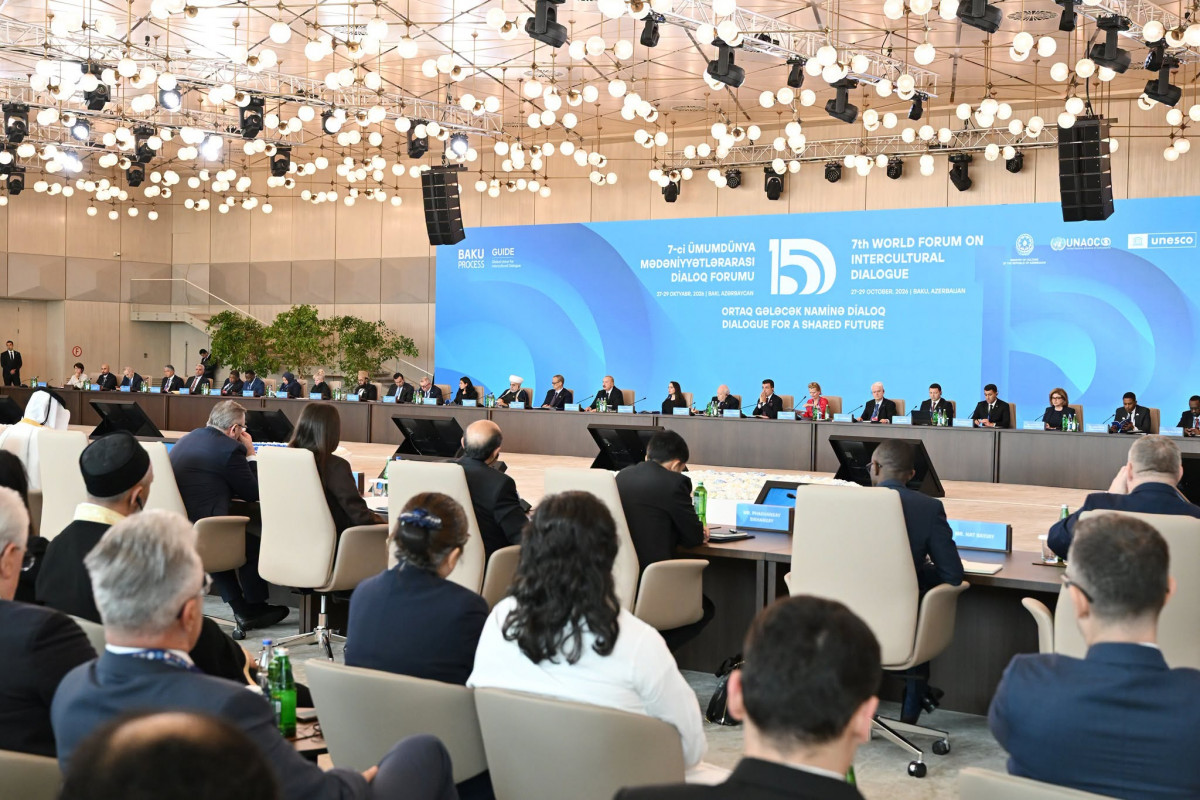
Intercultural dialogue is of great importance in the modern world for strengthening international trust, maintaining social stability, and promoting sustainable development. In a context where geopolitical tensions are rising and cultural differences sometimes become a source of conflict, reinforcing the institutional foundations of this dialogue takes on particular significance. The 7th World Forum on Intercultural Dialogue, held in Baku, serves as a vital platform for the development of international cooperation in this regard. The Forum’s theme, “Dialogue for a Common Future,” highlights the importance of fostering peace, mutual understanding, and cooperation among diverse societies.
According to Simrah Ismayilova, a senior advisor in the Monitoring and Evaluation Department at the Center for Analysis of Economic Reforms and Communication, Azerbaijan’s initiatives in this sphere are an integral part of the country’s long-term cultural policy. As President Ilham Aliyev emphasized at the opening of the Forum, the event has evolved over the years into an effective and inclusive international platform, contributing not only to intercultural relations but also to the discussion of pressing issues on the global agenda. This experience demonstrates that intercultural dialogue has transcended the scope of isolated events, developing instead into a mechanism for sustained international cooperation.
Viewing culture as a strategic factor for development also highlights its connection to socio-economic progress and a nation’s international standing. The “Azerbaijan Culture – 2040” Concept and the State Program for the development of tourism identify the preservation, restoration, and public presentation of cultural heritage as key priorities. This approach is particularly significant in the context of restoring historical and cultural heritage, revitalizing cultural life, and establishing tourism infrastructure in the territories liberated from occupation. Simrah Ismayilova notes that the preservation of cultural heritage, alongside the safeguarding of historical memory, also contributes to the socio-economic revival of the liberated territories, their integration into the country’s unified cultural space, and the enhancement of civic engagement among the local population. In this regard, beyond the restoration of historical monuments, it is essential to ensure the sustainability of cultural activities in these areas and to reintegrate cultural spaces into the daily lives of the community. Restored monuments and revitalized cultural centers strengthen the link between the past and the future, enabling the transmission of historical heritage to subsequent generations. Thus, the protection of cultural heritage is significant both for sustaining national memory and for supporting social integration and long-term stability.
The outcomes of this policy are not confined to the cultural and humanitarian spheres; they also create opportunities for economic development. The international promotion of cultural heritage strengthens the country’s cultural standing, while the development of cultural tourism fosters employment in the regions, creates new opportunities for small and medium-sized enterprises, and expands local economic activity. The systematic restoration and preservation of historical monuments not only ensures their transmission to future generations but also lays the groundwork for realizing their economic value within tourism and related sectors.
The declaration of 2026 as the “Year of Urban Planning and Architecture” in Azerbaijan underscores the importance placed on the integrated development of the culture, tourism, and urban planning sectors. Initiatives in these areas can be viewed as part of a comprehensive approach aimed at preserving historical heritage, enhancing the quality of the living environment, and developing the country’s cultural potential. In this context, hosting the Forum in Baku facilitates the discussion of Azerbaijan’s intercultural cooperation initiatives on an international stage and paves the way for new collaborative opportunities. According to Simrah Ismayilova, the importance Azerbaijan places on traditions of multiculturalism and intercultural dialogue constitutes a key aspect of its international cooperation policy. Amidst regional and global tensions, promoting mutual understanding between different cultures, identifying shared values, and expanding opportunities for cooperation take on particular significance. However, the long-term impact of dialogue initiatives depends on their being supported by consistent policy, institutional cooperation, and concrete operational mechanisms. In this regard, the value of international forums is determined not merely by the organization of discussions, but by the extent to which the agreements reached and initiatives proposed are translated into practical outcomes.
One of Azerbaijan’s primary initiatives in this sphere is the "Baku Process," established at the initiative of President Ilham Aliyev. Aimed at fostering intercultural and interreligious dialogue, this platform brings together governments, international organizations, civil society institutions, and representatives of diverse cultures.
Over the past 15 years, the World Forums on Intercultural Dialogue, held within the framework of the “Baku Process,” have served as an international platform for discussing global challenges and promoting mutual understanding. The participation of 500 international guests from 100 countries in the 7th Forum, alongside a total registration figure exceeding 2,000, demonstrates the international reach of this initiative. The long-term significance of the Forum lies in the transformation of this broad representation into concrete cooperation initiatives, shared avenues for action, and sustainable outcomes.
Related news

An employee of the CAERC delivered a presentation on issues related to the indicative…
Sevinj Jabbarova, a leading consultant at the Monitoring and Evaluation Division of the Center for Analysis of Economic Reforms and Communication (CAERC), participated in a meeting held at the Ministry of Health. The meeting focused…

Strategic rapprochement and new cooperation opportunities in Azerbaijan–Vietnam…
Relations between Azerbaijan and Vietnam have entered a new phase in recent years, marked by stronger political dialogue, expanded economic cooperation and the development of humanitarian ties. The adoption of the Joint Declaration…

Indicative planning under the State Programme for Baku’s transport infrastructure…
Discussions are ongoing at the Center for Analysis of Economic Reforms and Communication (CAERC) on clarifying the target values for measures planned for implementation under state programmes in 2027 and their performance indicators.…

The status of implementation of the State Program for the socio-economic development…
The improvement of the business and investment climate in Nakhchivan and the development of its industrial potential were discussed during an online meeting of the Coordination Group for the “State Program on the Socio-Economic…

COMMENTARY: IMF’s outlook for Azerbaijan: external position strengthens, non-oil…
According to the International Monetary Fund’s October forecast, Azerbaijan’s current account surplus will rise to 11.3% of GDP in 2026, while the ratio of total public debt to GDP will decline to 16.5%. The Fund expects…

Ramil Huseyn spoke about the economic dividends of lasting peace in the South Caucasus…
A conference titled “Peace and Security: In the Context of New Geopolitical Realities in the South Caucasus” was held to mark the 80th anniversary of Baku Slavic University (BSU) and the 80th anniversary of the commencement…

The 2027 targets for water resources and water supply were discussed
Online meetings were held under the organisation of the Center for Analysis of Economic Reforms and Communication (CAERC) to conduct indicative planning for 2027 and уточ clarify target values for performance indicators related to…

Azerbaijan will expand new investment opportunities amid global economic changes…
Isa Gasimov, Head of the “Enterprise Azerbaijan” portal, operated by the Center for Analysis of Economic Reforms and Communication (CAERC), commented on the impact of geopolitical and technological changes in the global…
Op-eds
Aykhan Gadashov
Head of the Azexport portal
Azerbaijan and Great Britain: New Economic and Political Horizons of a Strategic Alliance
Abdulrahim Dadashov
Deputy head of the Monitoring and evaluation division
Reforms in the area of construction permits contribute to improving the quality indicators of the business environment
Ilyas Huseynov
Head of the Turkic World Research Center
Azerbaijan’s Chairmanship of the OTS: Deepening Economic and Trade Cooperation and Strengthening the Regional Economic Power…
Isa Gasimov
Head of the “Enterprise Azerbaijan” portal
New Opportunities in Technology Parks: Commercialization and Export of Innovations
Abdulrahim Dadashov
Deputy head of the Monitoring and evaluation division
The establishment of the Karabakh National Park creates new opportunities for ecological restoration and sustainable tourism…
Sevinj Jabbarova
Leading consultant of the Monitoring and evaluation division
New Pharmaceutical Manufacturing Facility Opens New Opportunities for the Development of Local Pharmaceutical Industry
Tarana Salifova
Advisor to the Executive Director of the CAERC
The Great Return at a New Stage: Sustainable Settlement and Economic Development