
Development of the Mining and Metallurgical Industry Forms a New Human Capital Agenda for the Education System
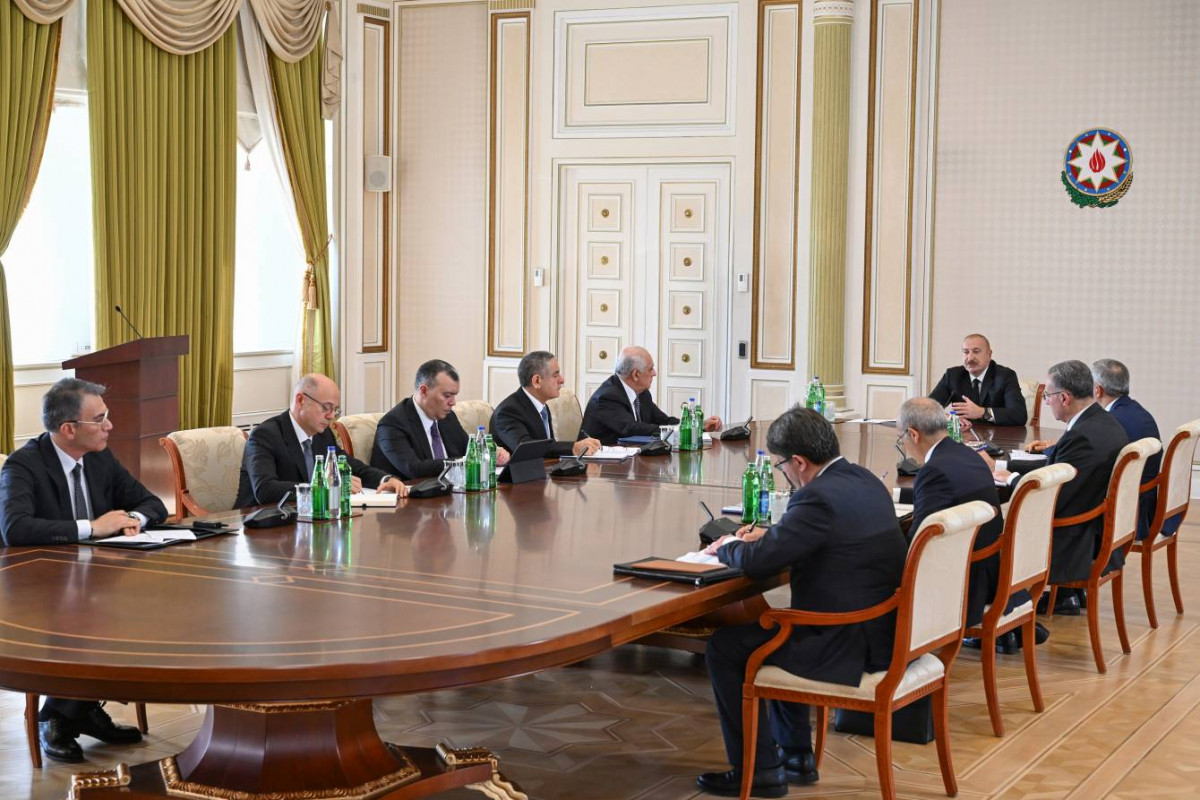
The main directions for the new development phase of the industry were presented at the meeting held on September 22 under the chairmanship of the President of the Republic of Azerbaijan, Ilham Aliyev, dedicated to the "State Program for 2027–2030 on the Development of the Mining (Metal Ores) and Metallurgical Industry in the Republic of Azerbaijan." The State Program envisages not only the extraction of mineral raw materials, but also their deeper domestic processing and the manufacturing of high-value-added products.
The targets presented at the meeting also generate new challenges for the education system. This fact is corroborated by the emphasis on how the program's implementation will increase the demand for qualified personnel, as well as the identification of enhancing scientific potential, supporting research and development (R&D), and strengthening education-industry cooperation as distinct priorities.
Ilkin Gasimov, Senior Advisor of the Economic Analysis Department at the Center for Analysis of Economic Reforms and Communication (CAERC), believes that this process indicates that the demand on the education system will change not only quantitatively, but also in terms of quality and structure. According to him, the expansion of the mining and metallurgical industry should not be construed merely as an increasing demand for mining engineers. Alongside geology, metallurgy, and materials science, the emergence of new workforce needs can be forecasted in fields such as process automation, mechanics, power engineering, chemical engineering, industrial safety, environmental management, laboratory technologies, and logistics. One of the core issues is ensuring alignment between the pace of industrial development and workforce training. Just as the transition of large-scale industrial projects from the investment phase to production requires time, preparing new specialists in higher and vocational education is likewise a long-term process. For this reason, it is critical to determine the prospective demand for human resources in advance, rather than after production capacities have already commenced operations. In other words, undertaking industrial investment and investment in human capital in parallel is of particular importance.
According to Ilkin Gasimov, the expansion observed in Azerbaijan's vocational education system in recent years creates an essential foundation in this direction. In particular, expanding the dual education model can be significant for the mining and metallurgical industry. In these fields, theoretical preparation alone is insufficient; engaging students in real production processes during their studies and enabling them to work with modern equipment and technologies can facilitate their transition into the labor market. Linking the specialization profiles of new and modernized vocational education institutions with the industrial demand emerging across regions also presents an important opportunity.
Nonetheless, approaching the matter solely at the level of vocational education is not enough. The transition from ore extraction to deeper processing and end-product manufacturing elevates the role of highly qualified engineers and researchers. Therefore, aligning higher education programs with the requirements of new industrial technologies, as well as universities conducting joint laboratories and applied research projects with production enterprises, is of particular significance.
Ilkin Gasimov notes that university–industry cooperation should not be limited to internships; it must encompass the participation of enterprises in curriculum design and teaching, students working on real industrial problems, and expanding applied research in relevant areas. This cooperation can positively impact both the quality of education and the technological capabilities of enterprises.
Another crucial direction is regional workforce training. The projects planned in Dashkasan, Karabakh, Eastern Zangezur, Nakhchivan, and other areas highlight the need to adapt the specialization profiles of vocational and higher education institutions in the regions to the prospective requirements of local economies. This approach can serve to improve local employment and the staffing of enterprises.
The new industrial phase also necessitates the retraining of the existing workforce. Against the background of automation, digitalization, and modern environmental standards, expanding short-term modular programs, micro-credentials, and in-house professional development mechanisms can accelerate the adaptation of labor resources to new technologies.
Thus, while the mining and metallurgical projects planned for 2027–2030 enable more effective utilization of Azerbaijan's existing personnel potential, they also demand the transition of this potential to a qualitatively new phase. Forecasting the prospective demand of the labor market, aligning vocational and higher education programs with this demand, expanding dual education, deepening university–industry cooperation, and linking regional workforce preparation with economic projects can build a stronger bond between industrial investment and human capital.
Related news

An employee of the CAERC delivered a presentation on issues related to the indicative…
Sevinj Jabbarova, a leading consultant at the Monitoring and Evaluation Division of the Center for Analysis of Economic Reforms and Communication (CAERC), participated in a meeting held at the Ministry of Health. The meeting focused…

Strategic rapprochement and new cooperation opportunities in Azerbaijan–Vietnam…
Relations between Azerbaijan and Vietnam have entered a new phase in recent years, marked by stronger political dialogue, expanded economic cooperation and the development of humanitarian ties. The adoption of the Joint Declaration…

Indicative planning under the State Programme for Baku’s transport infrastructure…
Discussions are ongoing at the Center for Analysis of Economic Reforms and Communication (CAERC) on clarifying the target values for measures planned for implementation under state programmes in 2027 and their performance indicators.…

The status of implementation of the State Program for the socio-economic development…
The improvement of the business and investment climate in Nakhchivan and the development of its industrial potential were discussed during an online meeting of the Coordination Group for the “State Program on the Socio-Economic…

COMMENTARY: IMF’s outlook for Azerbaijan: external position strengthens, non-oil…
According to the International Monetary Fund’s October forecast, Azerbaijan’s current account surplus will rise to 11.3% of GDP in 2026, while the ratio of total public debt to GDP will decline to 16.5%. The Fund expects…

Ramil Huseyn spoke about the economic dividends of lasting peace in the South Caucasus…
A conference titled “Peace and Security: In the Context of New Geopolitical Realities in the South Caucasus” was held to mark the 80th anniversary of Baku Slavic University (BSU) and the 80th anniversary of the commencement…

The 2027 targets for water resources and water supply were discussed
Online meetings were held under the organisation of the Center for Analysis of Economic Reforms and Communication (CAERC) to conduct indicative planning for 2027 and уточ clarify target values for performance indicators related to…

Azerbaijan will expand new investment opportunities amid global economic changes…
Isa Gasimov, Head of the “Enterprise Azerbaijan” portal, operated by the Center for Analysis of Economic Reforms and Communication (CAERC), commented on the impact of geopolitical and technological changes in the global…
Op-eds
Aykhan Gadashov
Head of the Azexport portal
Azerbaijan and Great Britain: New Economic and Political Horizons of a Strategic Alliance
Abdulrahim Dadashov
Deputy head of the Monitoring and evaluation division
Reforms in the area of construction permits contribute to improving the quality indicators of the business environment
Ilyas Huseynov
Head of the Turkic World Research Center
Azerbaijan’s Chairmanship of the OTS: Deepening Economic and Trade Cooperation and Strengthening the Regional Economic Power…
Isa Gasimov
Head of the “Enterprise Azerbaijan” portal
New Opportunities in Technology Parks: Commercialization and Export of Innovations
Abdulrahim Dadashov
Deputy head of the Monitoring and evaluation division
The establishment of the Karabakh National Park creates new opportunities for ecological restoration and sustainable tourism…
Sevinj Jabbarova
Leading consultant of the Monitoring and evaluation division
New Pharmaceutical Manufacturing Facility Opens New Opportunities for the Development of Local Pharmaceutical Industry
Tarana Salifova
Advisor to the Executive Director of the CAERC
The Great Return at a New Stage: Sustainable Settlement and Economic Development