
In the past five years, significant economic potential has been formed in Karabakh and Eastern Zangazur
One of the five National Priorities determining the socio-economic development of our country, the Great Return to the liberated territories is being carried out under the leadership of President Ilham Aliyev, with large-scale restoration and reconstruction work taking place in these areas. Efforts to build modern infrastructure, construct new settlements, and ensure the safe and comfortable return of former internally displaced persons to their native lands are continuing at a rapid pace.
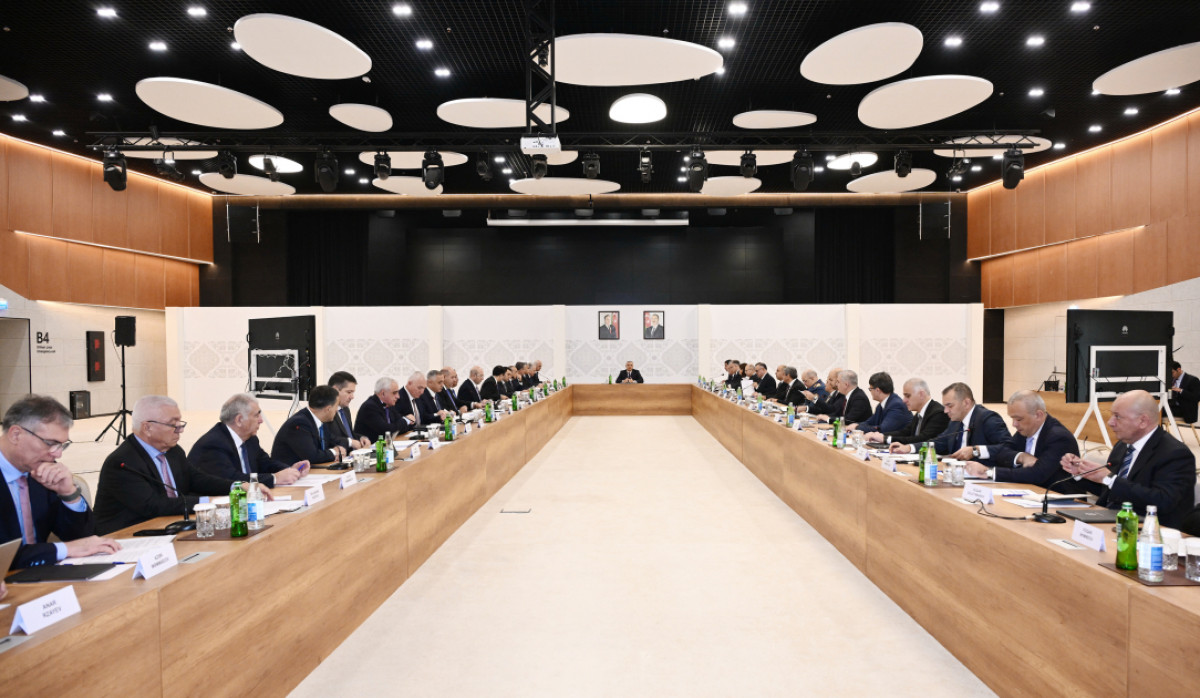
The views expressed at the meeting, chaired by Samir Nuriyev, Head of the Presidential Administration of the Republic of Azerbaijan and the Coordination Headquarters for the Centralised Resolution of Issues in the Liberated Territories, and held in the city of Zangilan to mark the 5th anniversary of the Headquarters' activities, further prove this.
Yusif Mammadov, the Senior Advisor of the Sector for Monitoring Sectoral Programs at the Center for Analysis of Economic Reforms and Communication, stated that the large-scale infrastructure projects being implemented in the liberated territories are of strategic importance for the modernization of the domestic road network, diversification of transport links, and further strengthening of our country's position as a regional transit hub. According to him, these projects ensure both the rapid recovery of economic activity and the expansion of investment inflows, as well as the establishment of a sustainable socio-economic foundation for the gradual resettlement of the territories. The work in the Zangezur corridor, in particular, will significantly expand the country's transport and logistics capabilities, further enhance its transit potential, and elevate Azerbaijan's regional and global cooperation prospects to a new level.
According to Yusif Mammadov, the rapid development of industrial parks in the liberated territories will strengthen the region's economic revival and competitive growth, attracting hundreds of millions in investments, creating new job opportunities, and significantly expanding production to meet both domestic demand and export potential. Furthermore, large-scale projects aimed at restoring communal infrastructure accelerate the socio-economic development of the region and ensure the necessary conditions for the population's comfortable living. At the same time, the commissioning of social infrastructure facilities in the liberated areas significantly contributes to accelerating resettlement, improving the welfare of the population, and ensuring long-term habitation in the region.
The fertile land and favorable climatic conditions of the liberated regions create vast opportunities for the development of traditional agricultural sectors, and significant efforts are being made to effectively utilize this potential. The establishment of modern irrigation systems, the creation of livestock complexes, and the development of intensive horticulture are aimed at ensuring the efficient use of the natural climatic potential of Karabakh and Eastern Zangazur. All these initiatives serve as clear indicators of the region's rapid development in terms of increasing agricultural productivity, rational resource management, and the formation of competitive, high-value-added production.
Significant steps are being taken to stimulate entrepreneurial activity in the liberated territories, create a favorable business environment for investors, and support the restoration of local production sectors. The establishment of new production and service enterprises, aimed at increasing employment, is expanding economic revival in the region and broadening job opportunities for the population.
All these efforts, in addition to revealing the tangible results of the restoration and development process, demonstrate the consistent and targeted implementation of the President's policy aimed at revitalizing the liberated territories, as well as the special attention given to this area. As a result of successfully implemented government programs and projects, over 62,000 individuals, including those employed in the public and private sectors and those pursuing education, now have their livelihoods and activities supported in the liberated territories.
The Senior Advisor from the Center for Analysis of Economic Reforms and Communication (CAERC) added that the large-scale restoration and construction projects being implemented in the liberated territories accelerate the integration of Karabakh and Eastern Zangazur into the national economy, create conditions for their formation in line with a modern development model, and make a significant contribution to Azerbaijan’s sustainable socio-economic development.
Related news

Food Safety Programme for 2027–2032: Strategic Importance for Businesses and Consumers
The approval, by the Order of President Ilham Aliyev, of the “State Programme for 2027–2032 on Ensuring Food Safety in the Republic of Azerbaijan” marks the beginning of a new strategic stage in the integration of…

The next meeting of the working group on the “Green Energy Space” was held
The next meeting of the “Green Energy Space” working group, established to ensure the implementation of the measures envisaged in the “Strategy for the Socio-Economic Development of the Republic of Azerbaijan for…

A New Approach to Managing Off-Budget Funds Will Strengthen Financial Discipline
The President of the Republic of Azerbaijan, Ilham Aliyev, has signed a Decree “On additional measures regarding the use of targeted budget funds established within the state budget and the extra-budgetary funds of organizations…

CAERC to Monitor and Evaluate the Implementation of the State Program on Food Safety
President of the Republic of Azerbaijan Ilham Aliyev has signed an Order approving the “State Program for Ensuring Food Safety in the Republic of Azerbaijan for 2027–2032.” According to the Order, the monitoring…

Meeting Held at CAERC on the Implementation of the State Program on Tourism Development
A meeting was held at the Center for Analysis of Economic Reforms and Communication (CERC) regarding the implementation of the “State Programme for 2026–2030 on the Development of Tourism in the Republic of Azerbaijan”.…

Meeting of the “Healthy Lifestyle” Working Group Held
The next meeting of the “Healthy Lifestyle” Working Group was held in connection with the implementation of the targets envisaged in the “Socio-Economic Development Strategy of the Republic of Azerbaijan for 2022–2026”.…

Azexport Portal Brings Local Art Supplies to International Markets
The Azexport portal, operated by the Center for Analysis of Economic Reforms and Communication (CAERC), continues its efforts to expand non-oil exports and support local producers in accessing global markets. As part of these efforts,…

Meeting of the “Human Capital and Education” Working Group Held
The next meeting of the “Human Capital and Education” Working Group was held to review the results of the work carried out during the first half of 2026 under the “Education Meeting the Requirements of the 21st Century”…
Op-eds
Aykhan Gadashov
Head of the Azexport portal
“Geoeconomic Stability Corridor”: The $1 Billion Trade Target with Uzbekistan Opens New Horizons for Business
Isa Gasimov
Head of the “Enterprise Azerbaijan” portal
Crowdfunding: New Perspectives in Startup Financing in Azerbaijan
Elnur Alakbarov
Deputy head of the Economic analysis division
New Action Plan on Employment: Digitalization and Result-Oriented Management
Abdulrahim Dadashov
Deputy head of the Monitoring and evaluation division
Agricultural support mechanisms will create new opportunities for farmers and exporters
Ilyas Huseynov
Head of the Turkic World Research Center
Large-Scale Modernization of the Baku-Tbilisi-Kars Railway: A New Strategic Phase in the Middle Corridor and Eurasian Connectivity
Rashad Najafli
Deputy head of the Economic analysis division
Azerbaijan: A Guarantor of Peace and Security in the South Caucasus
Isa Gasimov
Head of the “Enterprise Azerbaijan” portal
Transition to an Innovation Ecosystem: Azerbaijan’s Strategic Choice