
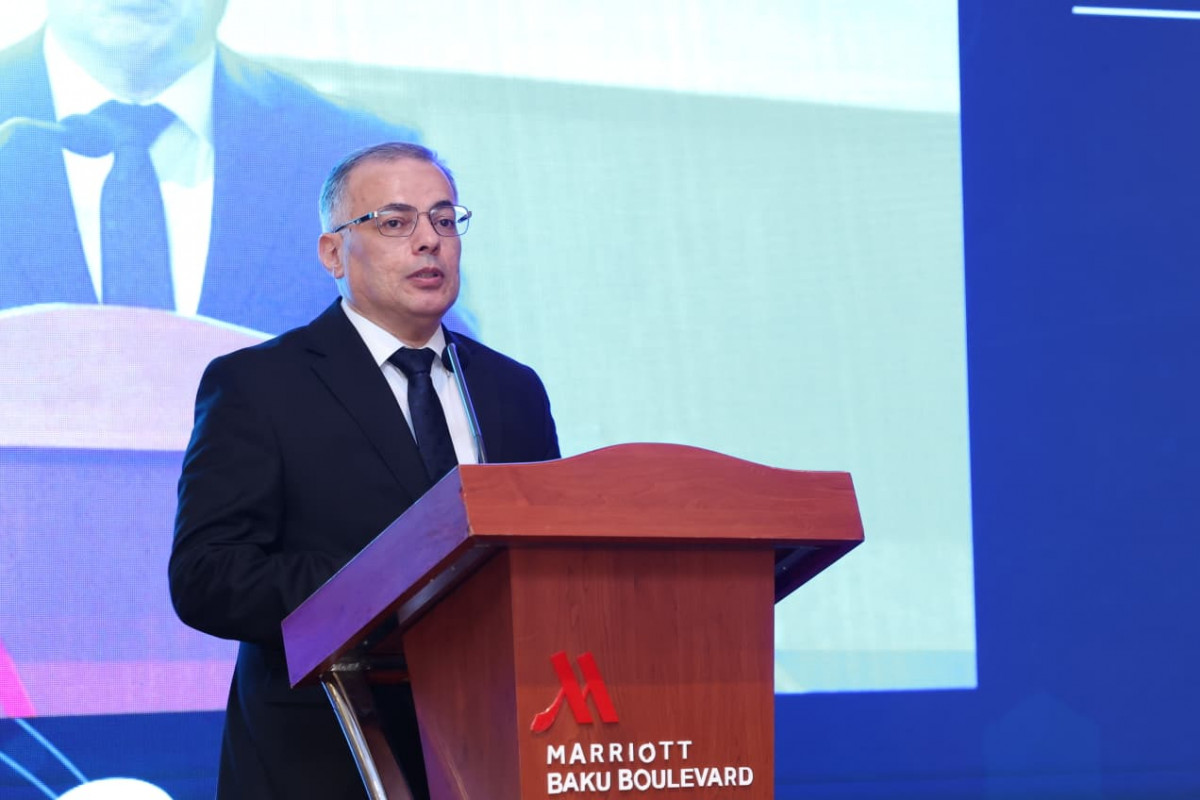
Vusal Gasimli spoke at the opening ceremony of the "10th International Banking Forum 2026" held in Baku
Vusal Gasimli, Executive Director of the Center for Analysis of Economic Reforms and Communication (CAERC) — a Doctor of Economic Sciences and Professor — delivered a speech at the opening ceremony of the "10th International Banking Forum 2026," held in Baku.
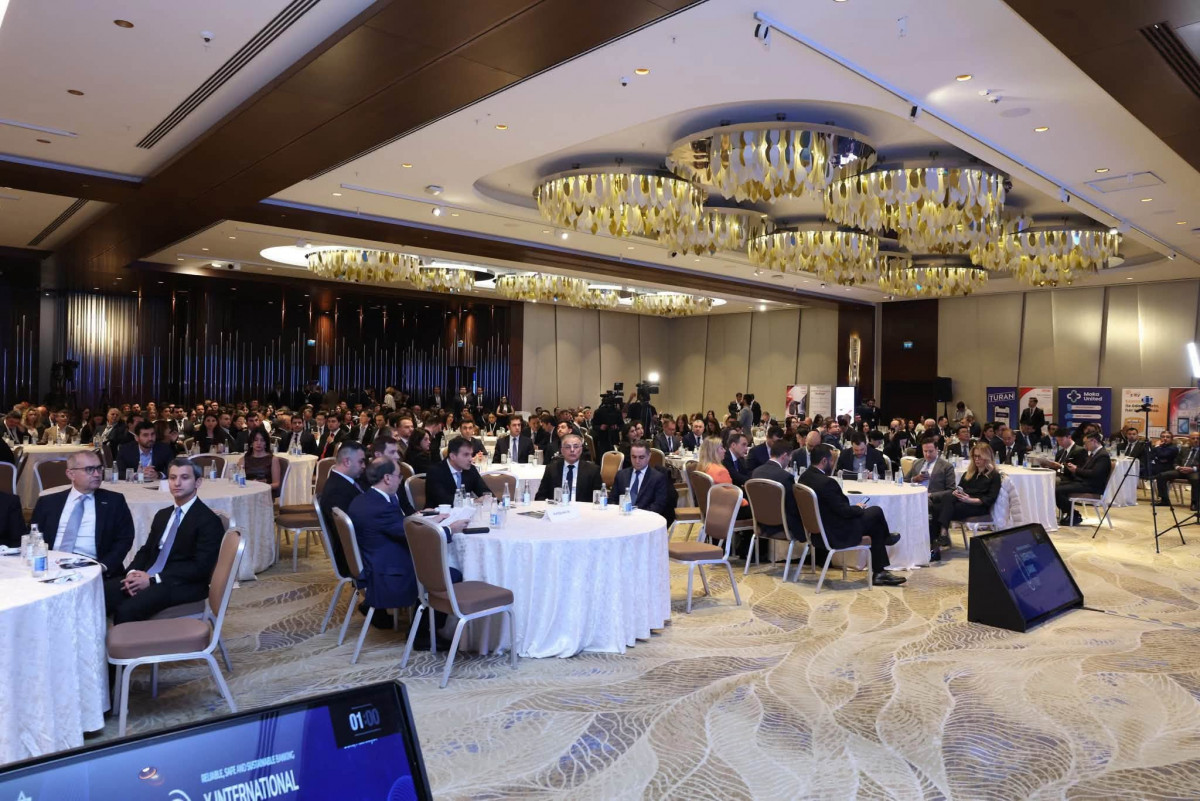
The forum serves as a significant platform for discussing pressing issues regarding the future of banking, bringing together representatives from the banking and financial sectors, international experts, regulatory bodies, and technology companies.
Vusal Gasimli emphasized that the integration of modern technologies and analytical approaches is vital for establishing a reliable, secure, and resilient banking sector. In particular, the application of artificial intelligence (AI) and Big Data creates new opportunities for risk management. Through these technologies, banks can assess credit, liquidity, market, and operational risks more proactively and accurately; furthermore, by utilizing real-time analytical decision-making mechanisms, they gain the ability to respond both promptly and flexibly. The Executive Director of the Center for Analysis of Economic Reforms and Communication (CAERC) noted that, in this context, aligning banking operations with cybersecurity requirements and effectively managing risks associated with digital payments are of critical importance. The expansion of electronic banking and cashless payments necessitates the strengthening of security mechanisms and the assurance of reliability in financial transactions. The volume of domestic cashless card payments increased by 25.6%, reaching 99.1 billion manats, while the number and volume of e-commerce transactions rose by 43.4% and 29.8%, respectively. Furthermore, customer transfers via internet and mobile banking saw increases of 12.4% and 14.3%, respectively.
According to Vusal Gasimli, positive trends are being observed in the banking sector regarding the strengthening of financial stability and the expansion of credit activity. Specifically, during the reporting period, the aggregate capital of the banking sector grew by 3.3%—or 224 million manats—reaching 7.1 billion manats. This indicator demonstrates that the financial resilience of the banking sector has strengthened and that the scope for financial intermediation within the economy has expanded. Within the structure of the banking sector's assets, the net loan portfolio accounted for 49.1%, liquid assets for 25.3%, and other assets for 25.6%. The significant share of the loan portfolio within the asset structure indicates that banks play a crucial role in financing the real sector. At the same time, the presence of liquid assets supports the banks' ability to meet their obligations on time and maintain financial stability. The banking sector's loan portfolio grew by 11.8%, reaching 31.8 billion manats. This lending dynamic facilitates broader access to financial resources for economic entities and enhances the role of the banking sector in supporting economic activity. Notably, the annual growth rate of the loan portfolio continues to outpace the 6.1% growth rate of the nominal non-oil GDP. In his concluding remarks, the Executive Director of the Center for Analysis of Economic Reforms and Communication (CAERC) stated that, within the framework of establishing a reliable, secure, and resilient banking sector, expanding cooperation among financial institutions, fintech companies, and other stakeholders not only accelerates information exchange and the adoption of innovations but also facilitates more effective risk management. In this context, the adaptation of regulatory bodies to technological advancements, the implementation of modern regulatory frameworks and standards, and the utilization of innovative tools—such as artificial intelligence and big data—play a crucial role in enhancing the security and operational efficiency of the banking sector. This approach enables banks to adapt agilely to a changing economic and technological landscape, improves the quality of financial services, and strengthens customer trust. The future development of the banking sector is defined not merely by the improvement of financial indicators, but also by the establishment of an innovative, integrated, and responsible operational model. The steps taken in this direction will make a significant contribution to safeguarding financial stability, supporting economic development, and further increasing public confidence in the banking system.
Related news

A representative of the CAERC participated in an international training program…
Elnur Alakbarov, Head of the Economic Analysis Division at the Center for Analysis of Economic Reforms and Communication (CAERC), participated in a training program titled "Seminar on Shared Development Experiences for Think…

A meeting was held regarding the implementation of the “State Program on the Regulation…
The Center for Analysis of Economic Reforms and Communication (CAERC) has concluded discussions aimed at refining the measures planned for implementation in 2027 under state programs, as well as the target values for outcome indicators.…

Representatives of the CAERC participated in a conference themed “Agronomy and Plant…
A conference titled “Agronomy and Plant Health: From Scientific Knowledge to Practical Experience” was held, organized by the Agrarian Services Agency (ASA) under the Ministry of Agriculture, with the support of the Food…

CAERC has launched monitoring visits under the Socio-economic development Strategy
The Center for Analysis of Economic Reforms and Communication (CAERC) has launched visits to the regions as part of the monitoring and evaluation of the implementation of the “Socio-Economic Development Strategy of the Republic…

Azerbaijan surpassed the US, the UK and Canada in digital services – a historic…
Azerbaijan’s rise by 36 places to 38th among 194 countries in the United Nations E-Government Development Index (EGDI) is a significant achievement in the development of e-government. Ismat Mehraliyeva, Head of the Digital Trade…

An employee of the CAERC delivered a presentation on issues related to the indicative…
Sevinj Jabbarova, a leading consultant at the Monitoring and Evaluation Division of the Center for Analysis of Economic Reforms and Communication (CAERC), participated in a meeting held at the Ministry of Health. The meeting focused…

Strategic rapprochement and new cooperation opportunities in Azerbaijan–Vietnam…
Relations between Azerbaijan and Vietnam have entered a new phase in recent years, marked by stronger political dialogue, expanded economic cooperation and the development of humanitarian ties. The adoption of the Joint Declaration…

Indicative planning under the State Programme for Baku’s transport infrastructure…
Discussions are ongoing at the Center for Analysis of Economic Reforms and Communication (CAERC) on clarifying the target values for measures planned for implementation under state programmes in 2027 and their performance indicators.…
Op-eds
Ismat Mehraliyeva
Head of the Digital Trade Hub
Azerbaijan surpassed the US, the UK and Canada in digital services – a historic achievement
Aykhan Gadashov
Head of the Azexport portal
Azerbaijan and Great Britain: New Economic and Political Horizons of a Strategic Alliance
Abdulrahim Dadashov
Deputy head of the Monitoring and evaluation division
Reforms in the area of construction permits contribute to improving the quality indicators of the business environment
Ilyas Huseynov
Head of the Turkic World Research Center
Azerbaijan’s Chairmanship of the OTS: Deepening Economic and Trade Cooperation and Strengthening the Regional Economic Power…
Isa Gasimov
Head of the “Enterprise Azerbaijan” portal
New Opportunities in Technology Parks: Commercialization and Export of Innovations
Abdulrahim Dadashov
Deputy head of the Monitoring and evaluation division
The establishment of the Karabakh National Park creates new opportunities for ecological restoration and sustainable tourism…
Sevinj Jabbarova
Leading consultant of the Monitoring and evaluation division
New Pharmaceutical Manufacturing Facility Opens New Opportunities for the Development of Local Pharmaceutical Industry