
A New Stage in Customs Reforms: New Opportunities for Business and Exports
President Ilham Aliyev has approved the Law on Amendments to the Customs Code. The changes hold exceptional significance in terms of facilitating trade, accelerating digital transformation, and establishing a more transparent institutional framework for participants in foreign economic activity.
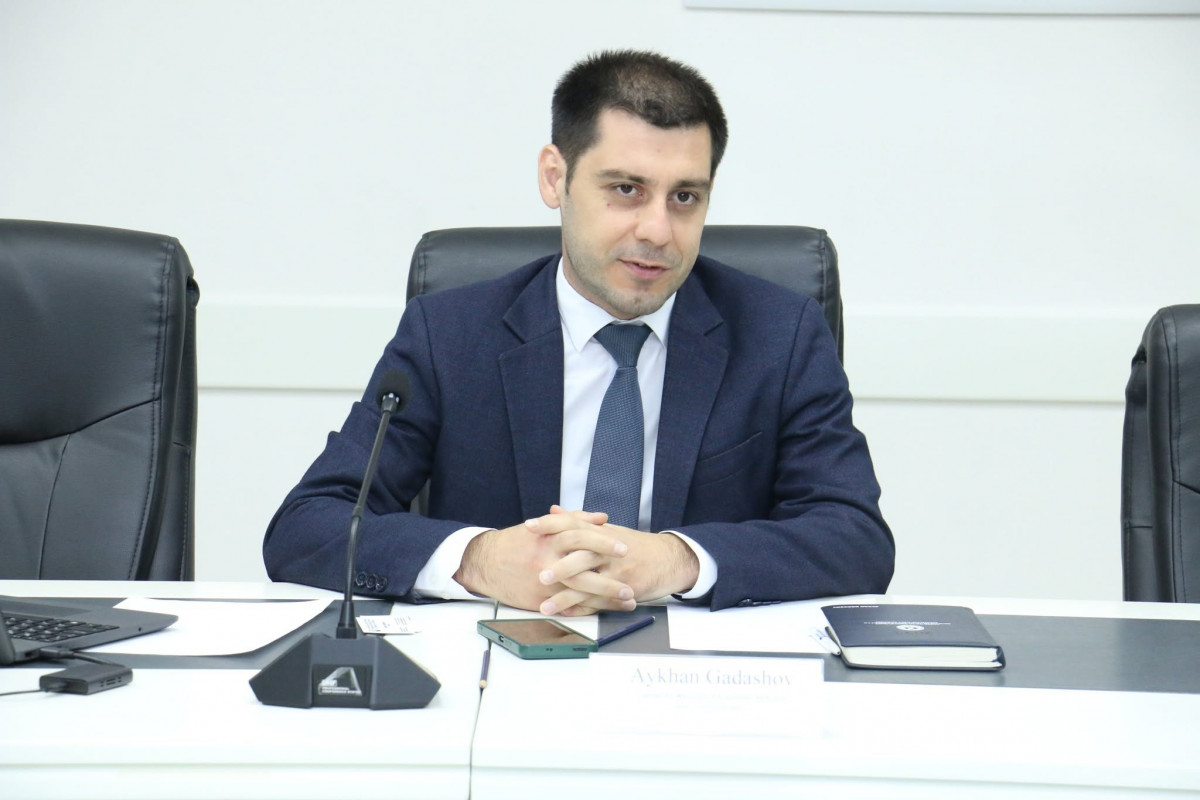
Commenting on the topic, Aykhan Gadashov, Head of the "Azexport.az" portal of the Center for Analysis of Economic Reforms and Communication, stated that in an era where speed and transparency are decisive in global supply chains, the new rules promise major advantages for our local producers. These reforms should be viewed not merely as an administrative legislative act, but as a unified partnership ecosystem built on mutual trust in business-customs relations. The core philosophy of the decree lies in minimizing delays at the border and ensuring a faster return of working capital to businesses.
The changes envisioned in the document are of vital importance for accelerating export processes and increasing logistical efficiency. In this framework, the preparation of conditions by the Cabinet of Ministers for granting Authorized Economic Operator (AEO) status will expand the application of the preferential customs regime intended for reliable business entities in international trade. As a result, companies holding AEO status will be subject to fewer customs inspections, border release of goods will be accelerated, and clearance procedures will be simplified.
Furthermore, the transition to a customs audit model entails shifting the primary burden of control from border-crossing checkpoints to the accounting and internal information systems of enterprises. This approach will allow goods to pass through the border more promptly without delay, while audit checks will be conducted at a post-clearance stage. Consequently, export operations will speed up, and the efficiency of logistical processes will improve. At the same time, updating the forms of customs control will further strengthen the application of a risk-based management model. Thus, exporters who comply with legislative requirements and operate transparently will face fewer inspections, focusing control efforts primarily on high-risk operations.
Aykhan Gadashov emphasized that the most notable aspect of the reforms for the non-oil sector—especially the agro-industrial complex—is the simplified clearance procedures. Simplifying the clearance of perishable goods such as fruits, vegetables, dairy products, meat, fish, and flowers, as well as live animals, will ensure the timely delivery of our agricultural products to foreign markets without quality loss. To optimize processes, the filling out of electronic declarations, as well as the updating of notification and act forms by the State Customs Committee, will reduce the human factor and potential errors, making document workflow significantly more agile.
The full implementation of these planned changes will optimize foreign trade operations by minimizing waiting times for containers and trucks at the border. This, in turn, will enable foreign buyers to receive goods faster, thereby increasing the global competitiveness of our local companies and making a significant contribution to the long-term sustainable development of Azerbaijan's economy.
Related news

Preliminary Figures Announced for the October 2026 Issue of the "Export Review"
Orijinal mətndəki cümlə quruluşuna və ardıcıllığa tam uyğun olaraq yenilənmiş tərcümə: Preliminary Figures Announced for the October 2026 Issue of the "Export Review" The Center for Analysis of Economic Reforms…

Textbook Titled "Sustainable Development Policy" Presented
A presentation ceremony was held for the textbook titled "Sustainable Development Policy" by Academician Urkhan Alakbarov, Rector of the Academy of Public Administration under the President of the Republic of Azerbaijan.…

Meetings Held with Representatives of State Institutions Under the Socio-Economic…
At the Center for Analysis of Economic Reforms and Communication (CAERC), meetings have commenced with representatives of relevant state institutions to refine the outcome indicators for the year-end 2026 results and prepare for the…

Finalists of "Startup School 4: Five Continents – 500 Startups" Global…
The startups qualifying for the final stage of the "Startup School 4: Five Continents – 500 Startups" global innovation program, carried out under the initiative of the "Enterprise Azerbaijan" portal operated…

Meeting Held at CAERC on "Safety Culture and Risk Management"
An awareness-raising meeting on the topic "Safety Culture and Risk Management" was held at the Center for Analysis of Economic Reforms and Communication (CAERC) with security expert Gazanfar Aloyev, initiated by the "Reform…

The “Turkish Economic Review” issue covering the first half of 2026 has been published
The "Turkish Economic Review" for the first half of 2026 (January-June No. 2) published by the Center for Analysis of Economic Reforms and Communication (CERACC) in cooperation with the Secretariat of the Organization of…

Meeting Held with Representatives of "The Coca-Cola Company" at CAERC
A meeting was held at the Center for Analysis of Economic Reforms and Communication (CAERC) with a delegation from "The Coca-Cola Company." During the meeting, Vusal Gasimli, Executive Director of CAERC, briefed the delegation…

CAERC Will Create a New Module for Monitoring the State Program on the Mining and…
Prime Minister of the Republic of Azerbaijan Ali Asadov has signed an Order on ensuring the implementation of Order No. 1226 of the President of the Republic of Azerbaijan dated September 23, 2026, "On approving the 'State…
Op-eds
Ilkin Gasimov
Chief advisor of the Economic analysis division
New Financial Model for Resource Allocation in General Education
Baghish Ahmadov
Advisor to the Executive director of the Center for Analysis of Economic Reforms and Communication
Azerbaijan International Investment Forum: Investment Cooperation and National Development Priorities
Abdulrahim Dadashov
Deputy head of the Monitoring and evaluation division
Environmental Responsibility is One of the Key Conditions in the Development of the Mining Industry
Latif Zeynalli
Head of State Programs Division
Development of Competition Will Create New Opportunities for Sustainable Economic Growth
Orkhan Sadigov
Head of the Monitoring and evaluation division
A New Approach to Managing Off-Budget Funds Will Strengthen Financial Discipline
Elshan Yusifli
Head of the Monitoring of sectoral programs sector
New Changes to Nakhchivan’s State Programme: Export, Logistics and Social Mechanisms Improved
Abdulrahim Dadashov
Deputy head of the Monitoring and evaluation division
New Law Strengthens the Sustainable Development and Digital Monitoring of the Fisheries Sector