
Modernization of the BTK: Logistics efficiency and strategic perspectives
In the modern era, where technological progress has transformed the world into a single economic organism, the development of international transport corridors stands as one of the primary driving forces of global trade and economic integration. Connecting Europe and Asia, the Baku–Tbilisi–Kars (BTK) railway line holds strategic importance in executing regional and international freight transport. From this perspective, the modernization of the BTK line has become a necessity driven by the increase in international cargo flows and growing interest in the Middle Corridor.
Commenting on the subject to AZERTAC, Agil Asadov, Department Head at the Center for Analysis of Economic Reforms and Communication (CAERC), stated that the modernized BTK railway line is considered one of the most critical international projects enriching the transport map of Eurasia and ensuring the restoration of the ancient Silk Road in a modern format. According to him, the line also carries profound geopolitical significance because it connects various regions within a unified logistics system, thereby serving to expand economic cooperation.
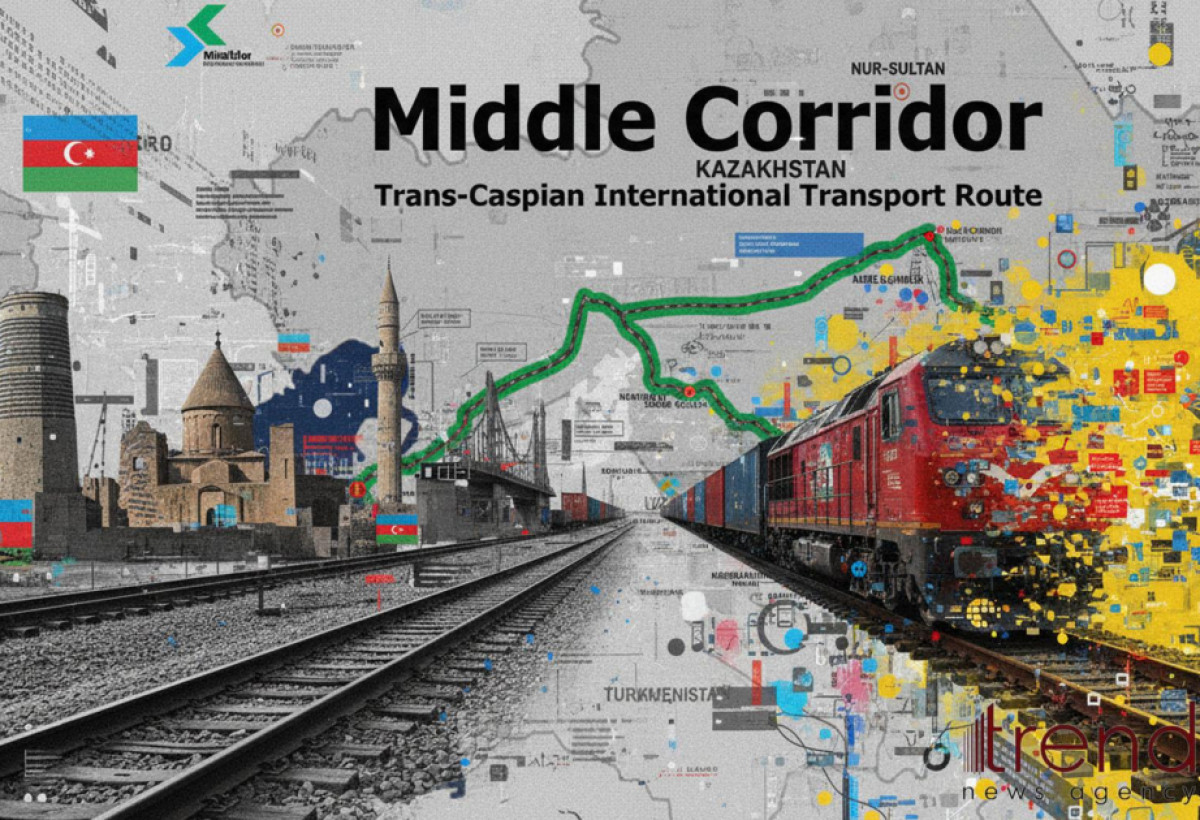
"Commissioned in 2017, the Baku–Tbilisi–Kars railway connected Azerbaijan, Georgia, and Türkiye, creating one of the shortest and most efficient land transport links between Europe and Asia. Operating as a core component of the Trans-Caspian International Transport Route (Middle Corridor), the BTK elevates the agility and intensity of freight shipments in the East-West direction.
In recent years, geopolitical shifts, the diversification of supply chains, and the expansion of Asia–Europe trade relations have significantly driven up demand for the BTK route. The inability of the existing infrastructure to fully accommodate the growing cargo volumes made the execution of modernization works imperative.
The modernization of the BTK railway was predominantly carried out across the sections located within the territory of Georgia, encompassing areas such as infrastructure renewal, construction of new roadbeds and bridges, modernization of signaling and control systems, and expansion of cargo reception and processing capacities. All these measures serve to enhance the route's safety and operational efficiency.
The completion of the modernization works will enable critical transformations in the operations of the Baku–Tbilisi–Kars line. In fact, the finalization of this modernization can be evaluated as the beginning of a new era for the BTK. Among these developments, the most significant outcome is the substantial expansion of the line's freight capacity. The capabilities of the railway line, which previously could handle approximately 1 million tons of cargo annually, have been multiplied to reach 5 million tons per year. Opportunities also exist to elevate this indicator even further in future phases," he noted.
A. Asadov stated that another crucial result yielded by the modernization relates to the reduction of transit time: "As a result of applying modern technologies and renewing the infrastructure, an increase in the travel speed of freight trains and a rise in the efficiency of border-crossing and logistics operations are secured, which will pave the way for shorter transit durations between Europe and Asia.
While generating positive impacts for all participating countries, the modernization of the BTK line will stimulate further growth in Azerbaijan's transit capabilities, reinforcing the country's position as an international logistics and transit hub. Its integration with the Baku International Sea Trade Port and other transport infrastructures will positively influence the growth of the country's transit revenues.
Another prominent advantage of the implemented modernization projects is characterized by the increased capacity and heightened competitiveness of the Middle Corridor. The modernized BTK line enhances the competitive advantages of the Middle Corridor in the international transport services market, driving its attractiveness even higher. Collectively, this establishes faster and more reliable transport connections among China, Central Asia, the Caucasus, and Europe."
Agil Asadov emphasized that alongside the achieved advantages, the modernization of the Baku–Tbilisi–Kars (BTK) railway line facilitates the formation of several critical perspectives.
"First and foremost, this process serves to further strengthen East–West transport links, and the volume of freight transport is projected to grow significantly over the coming decade. Particularly, the rising interest in the Middle Corridor across China–Europe trade routes will necessitate the intensification of the BTK line's utilization.
Concurrently, the modernization will boost the expansion of economic cooperation among the countries of the region and trigger the formation of new logistics centers. This, in turn, carries substantial economic weight regarding the strengthening of investment flows and the creation of new jobs. Along with this, the future launch of the Zangezur corridor will further elevate the strategic role of the BTK line, allowing for the formation of alternative and more agile transport connections among Türkiye, Azerbaijan, and Central Asia.
On the other hand, the modernized BTK line, as one of the fundamental components of the Middle Corridor, will further solidify its position among Eurasia's leading freight routes and enhance its strategic importance within the region's transit, logistics, and trade systems. Consequently, this development will contribute to the expansion of regional cooperation by further deepening integration processes in the fields of transport, logistics, and trade among the member states of the Organization of Turkic States.
Thus, analyses and observations provide a solid ground to conclude that the Baku–Tbilisi–Kars railway modernization project is of strategic importance, not only for infrastructure renewal but also for advancing the transport and logistics potential of the region. As a result of the reconstruction and improvement works carried out, the carrying capacity of the line will expand, the intensity and efficiency of cargo shipments will rise, and the competitive advantages of the Middle Corridor will be reinforced. The future increase in cargo flows, the expansion of international cooperation, and the further consolidation of the positions of the participating countries—including Azerbaijan—as transport-transit hubs can be evaluated as the primary outcomes of the BTK project. The Baku–Tbilisi–Kars railway is rightfully called the 'Iron Silk Road,' and its significance is expected to grow even further in the future," he added.
Related news

Food Safety Programme for 2027–2032: Strategic Importance for Businesses and Consumers
The approval, by the Order of President Ilham Aliyev, of the “State Programme for 2027–2032 on Ensuring Food Safety in the Republic of Azerbaijan” marks the beginning of a new strategic stage in the integration of…

The next meeting of the working group on the “Green Energy Space” was held
The next meeting of the “Green Energy Space” working group, established to ensure the implementation of the measures envisaged in the “Strategy for the Socio-Economic Development of the Republic of Azerbaijan for…

A New Approach to Managing Off-Budget Funds Will Strengthen Financial Discipline
The President of the Republic of Azerbaijan, Ilham Aliyev, has signed a Decree “On additional measures regarding the use of targeted budget funds established within the state budget and the extra-budgetary funds of organizations…

CAERC to Monitor and Evaluate the Implementation of the State Program on Food Safety
President of the Republic of Azerbaijan Ilham Aliyev has signed an Order approving the “State Program for Ensuring Food Safety in the Republic of Azerbaijan for 2027–2032.” According to the Order, the monitoring…

Meeting Held at CAERC on the Implementation of the State Program on Tourism Development
A meeting was held at the Center for Analysis of Economic Reforms and Communication (CERC) regarding the implementation of the “State Programme for 2026–2030 on the Development of Tourism in the Republic of Azerbaijan”.…

Meeting of the “Healthy Lifestyle” Working Group Held
The next meeting of the “Healthy Lifestyle” Working Group was held in connection with the implementation of the targets envisaged in the “Socio-Economic Development Strategy of the Republic of Azerbaijan for 2022–2026”.…

Azexport Portal Brings Local Art Supplies to International Markets
The Azexport portal, operated by the Center for Analysis of Economic Reforms and Communication (CAERC), continues its efforts to expand non-oil exports and support local producers in accessing global markets. As part of these efforts,…

Meeting of the “Human Capital and Education” Working Group Held
The next meeting of the “Human Capital and Education” Working Group was held to review the results of the work carried out during the first half of 2026 under the “Education Meeting the Requirements of the 21st Century”…
Op-eds
Aykhan Gadashov
Head of the Azexport portal
“Geoeconomic Stability Corridor”: The $1 Billion Trade Target with Uzbekistan Opens New Horizons for Business
Isa Gasimov
Head of the “Enterprise Azerbaijan” portal
Crowdfunding: New Perspectives in Startup Financing in Azerbaijan
Elnur Alakbarov
Deputy head of the Economic analysis division
New Action Plan on Employment: Digitalization and Result-Oriented Management
Abdulrahim Dadashov
Deputy head of the Monitoring and evaluation division
Agricultural support mechanisms will create new opportunities for farmers and exporters
Ilyas Huseynov
Head of the Turkic World Research Center
Large-Scale Modernization of the Baku-Tbilisi-Kars Railway: A New Strategic Phase in the Middle Corridor and Eurasian Connectivity
Rashad Najafli
Deputy head of the Economic analysis division
Azerbaijan: A Guarantor of Peace and Security in the South Caucasus
Isa Gasimov
Head of the “Enterprise Azerbaijan” portal
Transition to an Innovation Ecosystem: Azerbaijan’s Strategic Choice