
Azerbaijan–Uzbekistan Transport Relations Have Broad Prospects
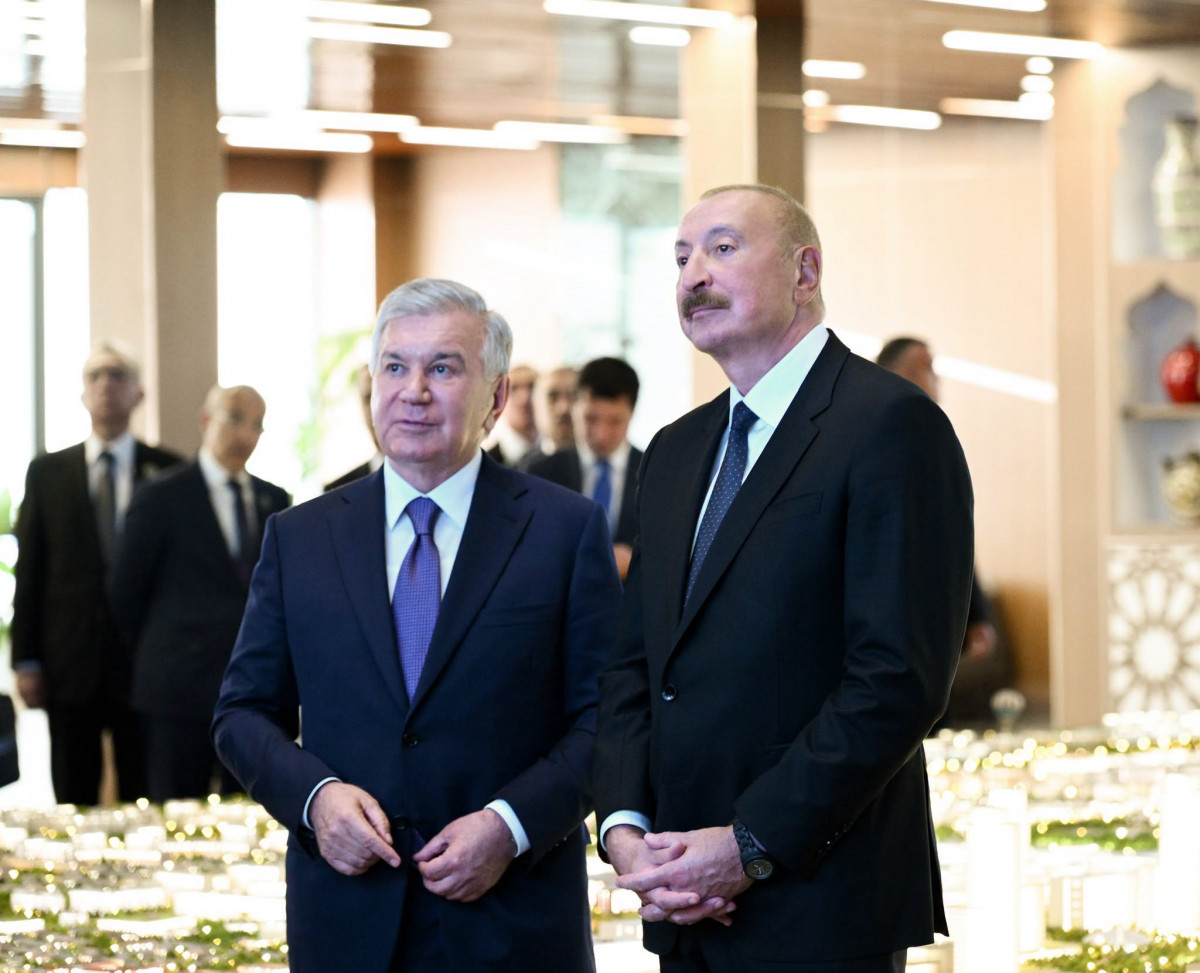
Relations between Azerbaijan and Uzbekistan, which share long-standing historical and cultural ties, have been developing dynamically along an upward trajectory. The diversification of bilateral relations and their expansion into a broader range of areas are also a reflection of the friendly relations between the two heads of state and the deep historical ties between the two nations.
As emphasized by President of the Republic of Azerbaijan Ilham Aliyev in his interview with the National Information Agency of Uzbekistan (UzA), trade turnover between Azerbaijan and Uzbekistan amounted to USD 795 million in 2025, representing an increase of more than threefold compared with the previous year. The positive momentum in bilateral trade has also continued in 2026. At the same time, the Azerbaijan–Uzbekistan Investment Company, established in 2024 with total capital of USD 500 million, is making a significant contribution to the implementation of promising projects across various sectors of the economy.
The statements made during the President’s visit to Uzbekistan, as well as in his interview with UzA, clearly demonstrate that transport, transit and logistics constitute one of the important areas of bilateral relations. Sharing his views on the issue, Aqil Asadov, Head of a Department at the Center for Analysis of Economic Reforms and Communication and Doctor of Economics, stated that Azerbaijan–Uzbekistan relations have acquired a broader dimension in recent years, evolving beyond political and economic cooperation toward a transport, transit and logistics partnership connecting Central Asia with the South Caucasus.
Clearly, transport connectivity serves as a means of facilitating broader socio-economic and other relations. The mutual visits of the heads of state, the discussions held, and the agreements signed demonstrate that relations between the two countries are becoming increasingly long-term and multifaceted. The signing of the Treaty on Eternal Friendship within the framework of the third meeting of the Supreme Intergovernmental Council further confirms this trend.
During his visit to Uzbekistan, President Ilham Aliyev stated in his remarks to the press: “Today, Central Asia and Azerbaijan constitute a single geopolitical and geoeconomic region with enormous potential and, at the same time, even greater development opportunities. The overall positive dynamics of the development of this vast—indeed, I would say, newly established and already sufficiently integrated—region also depends on close interaction between Uzbekistan and Azerbaijan.” These remarks not only reflect the scale of bilateral relations but also once again confirm the importance attached to them.
The expansion of transport connectivity is already reflected in freight transportation indicators. In 2024, the volume of transit cargo transportation between Azerbaijan and Uzbekistan increased by more than 18% compared with the previous year, exceeding 1.3 million tonnes. Positive dynamics continued in 2025, with the volume of transit transportation between the two countries increasing by approximately 6.7%. These figures demonstrate that transport connectivity is not merely a matter of potential but is already generating tangible cargo flows.
Of course, transport, transit and logistics cooperation represents one of the key challenges arising both from the geographical positions of the two countries and from contemporary global realities. The remarks by President of Uzbekistan Shavkat Mirziyoyev during his statement to the press—“Another important area of cooperation is transport and transit. We will jointly develop the potential of the Trans-Caspian Corridor, increase the efficiency of logistics infrastructure, and stimulate transportation”—once again confirm the priority that both sides attach to transport connectivity.
According to Agil Asadov, one of the principal strategic foundations of transport cooperation is the participation of both countries in the Middle Corridor—the Trans-Caspian International Transport Route (TITR). Azerbaijan, as a transit hub located on the western shore of the Caspian Sea, serves as an important gateway connecting Uzbekistan’s Central Asian markets with the Caucasus, Türkiye and Europe.
In this regard, the importance of the Middle Corridor for Uzbekistan is associated with its potential to expand the country’s access to alternative international markets, particularly given Uzbekistan’s status as a landlocked country in Central Asia. For Azerbaijan, Uzbekistan represents one of the important economic centers generating cargo flows from Central Asia. Thus, the geographical positions of the two countries are characterized more by complementarity than competition, creating favorable conditions for cooperation.
The significance of the Middle Corridor was also specifically emphasized in the Ankara Declaration adopted at the trilateral meeting between Azerbaijan, Uzbekistan and Türkiye in January 2025. The three countries agreed to continue cooperation in developing transport infrastructure, promoting digitalization, simplifying customs procedures, and improving the efficiency of border crossings. All these developments demonstrate that the advancement of transport, transit and logistics relations remains highly relevant.
The railway route Uzbekistan → Kazakhstan/Turkmenistan → Caspian Sea → Port of Baku → BTK → Türkiye → Europe represents one of the most promising directions. While Uzbekistan’s railway system generates and consolidates internal cargo flows across Central Asia, the Port of Baku and the Baku–Tbilisi–Kars (BTK) railway provide these cargoes with access to European destinations.
It should also be noted that a major advantage of this route is the integration of different modes of transport into a single logistics chain. In the future, linking the China–Kyrgyzstan–Uzbekistan railway project with the Middle Corridor could further expand Uzbekistan’s access to European markets through Azerbaijan. In this case, Azerbaijan–Uzbekistan relations would extend beyond bilateral transportation and become an important component of the broader Central Asia–Caspian–South Caucasus–Europe logistics system.
According to the Head of the Department, in line with contemporary challenges, digitalization and electronification are of particular importance in Azerbaijan–Uzbekistan transport cooperation. Digitalization reduces costs, increases operational efficiency, accelerates information exchange and the issuance of permits, reduces the administrative burden on carriers, enhances the transparency of transit processes, and provides other benefits.
In 2025, Azerbaijan and Uzbekistan reached an agreement on the full transition to electronic “Permit” documents for international road freight transportation. Initial pilot shipments were carried out in 2025, and the technical capabilities for exchanging electronic permits were established. Within the framework of trilateral Azerbaijan–Türkiye–Uzbekistan cooperation, digital solutions such as e-CMR and e-Permit are also being implemented, representing an important step toward the integration of regional transport systems.
Agil Asadov noted that another promising area of Azerbaijan–Uzbekistan cooperation is the establishment of joint logistics centers. The documents signed between the two countries and mutual investment flows provide a strong basis for such initiatives, while the growing volume of cargo flows and favorable geographical location make them increasingly necessary.
Undoubtedly, such centers should not be limited merely to the storage and sorting of cargo. They should also incorporate services related to customs clearance, insurance, freight forwarding, cargo consolidation, electronic documentation, and the management of multimodal transportation.
Given that a prospective Azerbaijan–Uzbekistan logistics center could facilitate the access of Uzbek companies to the Azerbaijani and European markets while simultaneously expanding the presence of Azerbaijani companies in Central Asian markets, the establishment of such centers can also be viewed as a necessity arising from the broader dynamics of bilateral relations.
Thus, the objective of increasing Azerbaijan–Uzbekistan trade turnover to USD 1 billion by 2030, the growing number of Azerbaijani companies operating in Uzbekistan, the implementation of Uzbek-invested projects in Azerbaijan, and the dynamics observed in China–Europe cargo flows all make it necessary to maintain continuous attention to transport, transit and logistics issues, regularly improve the relevant mechanisms, and, in particular, further streamline transportation along the Middle Corridor.
Considering that the Zangezur Corridor is increasingly expected to become an important component of the Middle Corridor in the near future, the significance of transport, transit and logistics connectivity becomes even more evident. The Zangezur Corridor is relevant not only in terms of facilitating the delivery of cargo to key markets but also as a project capable of connecting the entire Turkic world. This aspect should also be taken into account in the approaches of both countries to transport, transit and logistics cooperation.
In all cases, it is an undeniable reality that enhanced transport connectivity will have a significant positive impact on the budgets and economies of both countries, as well as on their overall bilateral relations.
Related news

A representative of the CAERC participated in a conference dedicated to the future…
Rashad Najafli, Deputy Director of the Economic Analysis Department of the Center for Analysis of Economic Reforms and Communication (CAERC), participated in the international conference on “New Challenges in Maintaining Financial…

New Opportunities in Technology Parks: Commercialization and Export of Innovations
The Decree of the President of the Republic of Azerbaijan dated October 22, 2026 on Amendments to the “Model Regulation on Technology Parks” provides for important innovations in terms of improving the activities of technoparks,…

Vusal Gasimli spoke at the opening of the Islamic Finance Forum
Vusal Gasimli, Executive Director of the Center for Analysis of Economic Reforms and Communication (CAERC) — a Doctor of Economic Sciences and Professor — delivered a speech at the opening ceremony of the "3rd Islamic…

CAERC expands cooperation with think tanks and universities in Uzbekistan
Ilyas Huseynov, Head of the Turkic World Research Center (TWRC) at the Center for Analysis of Economic Reforms and Communication (CAERC), held meetings with representatives from think tanks and higher education institutions, and delivered…

Meetings regarding preparations for the final monitoring and evaluation of the Socio-Economic…
The Center for Analysis of Economic Reforms and Communication (CAERC) has concluded a series of meetings with representatives from relevant government agencies. These meetings were held to refine outcome indicators for the year 2026—within…

The investment portfolio of “Enterprise Azerbaijan”’s partners exceeds 3 billion…
The global innovation program “Startup School 4: Five Continents – 500 Startups,” implemented by the “Enterprise Azerbaijan” portal of the Center for Analysis of Economic Reforms and Communication (CAERC),…

The establishment of the Karabakh National Park creates new opportunities for ecological…
The Order of the President of the Republic of Azerbaijan, Ilham Aliyev, dated October 20, 2026, "On the Establishment of the Karabakh National Park of the Republic of Azerbaijan," is regarded as a significant step toward…

World Bank: Azerbaijan’s strong financial buffers support economic stability and…
The "Europe and Central Asia Economic Update" and the "Macro-Poverty Outlook" for Azerbaijan, published by the World Bank in October 2026, indicate that the country has maintained its macroeconomic stability, strong…
Op-eds
Ilkin Gasimov
Chief advisor of the Economic analysis division
New Financial Model for Resource Allocation in General Education
Baghish Ahmadov
Advisor to the Executive director of the Center for Analysis of Economic Reforms and Communication
Azerbaijan International Investment Forum: Investment Cooperation and National Development Priorities
Abdulrahim Dadashov
Deputy head of the Monitoring and evaluation division
Environmental Responsibility is One of the Key Conditions in the Development of the Mining Industry
Latif Zeynalli
Head of State Programs Division
Development of Competition Will Create New Opportunities for Sustainable Economic Growth
Orkhan Sadigov
Head of the Monitoring and evaluation division
A New Approach to Managing Off-Budget Funds Will Strengthen Financial Discipline
Elshan Yusifli
Head of the Monitoring of sectoral programs sector
New Changes to Nakhchivan’s State Programme: Export, Logistics and Social Mechanisms Improved
Abdulrahim Dadashov
Deputy head of the Monitoring and evaluation division
New Law Strengthens the Sustainable Development and Digital Monitoring of the Fisheries Sector