
Azerbaijan–Central Asia Cooperation: A New Model of Regional Integration and Geoeconomic Connectivity
The statements made by President Ilham Aliyev at the 4th Shusha Global Media Forum reaffirm once again that Azerbaijan–Central Asia cooperation has entered a new strategic phase. Today, it is no longer merely about historical, cultural, and ethnic ties, but also about the formation of a unified geoeconomic space.
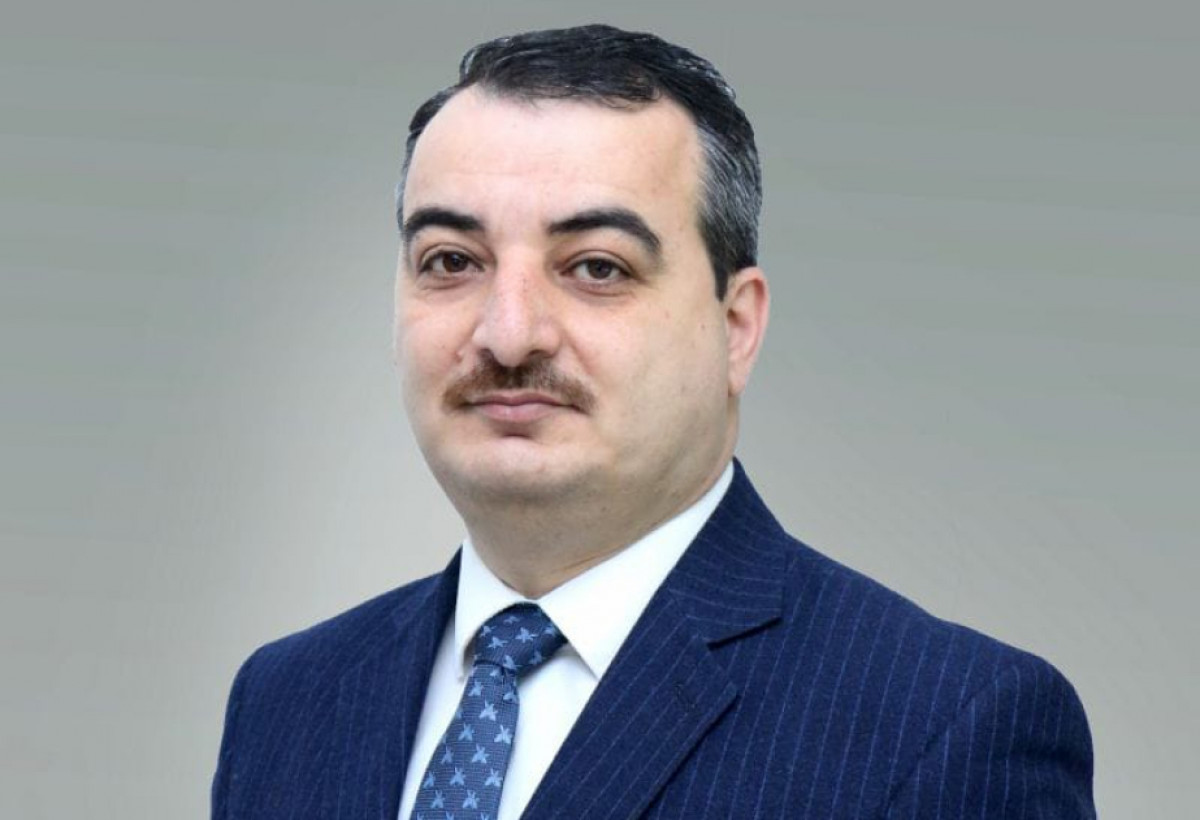
This was stated in a comment to AZERTAC by Ilyas Huseynov, Head of the Turkic World Research Center at the Center for Analysis of Economic Reforms and Communication (CAERC) and PhD in Political Science.
According to Ilyas Huseynov, Azerbaijan’s full participation in the Consultative Meeting of the Heads of State of Central Asia represents a crucial turning point in the history of interregional cooperation: "Alongside strengthening the institutional foundations of political dialogue between Central Asia and the South Caucasus, this initiative creates new opportunities for deepening economic integration. As President Ilham Aliyev emphasized, Central Asia and Azerbaijan are already beginning to operate as a unified economic and political space, serving the formation of a new geoeconomic architecture in Eurasia. Economic indicators also clearly demonstrate this potential. The Organization of Turkic States has become one of the significant regional cooperation platforms in Eurasia, possessing vast demographic and economic potential. The edition of the Turkic Economic Review for the first quarter of 2026, jointly published by CAERC and the Secretariat of the Organization of Turkic States (OTS), notes that the total GDP of Turkic states reached 673.6 billion US dollars in the first quarter of 2026. This accounts for 2.34 percent of global GDP. Their total population stands at 178.8 million people. The Review also highlights continuous progress in economic growth, trade, investment, industry, agriculture, banking, and public finance across the Turkic world, reflecting the region's expanding economic potential and integration. Strengthening transport connectivity, simplifying customs procedures, and developing logistics infrastructure can enable this figure to increase significantly in the coming years."
The Head of CTWS emphasized that Azerbaijan plays a key geoeconomic bridge role in this process. "As President Ilham Aliyev noted, by investing billions of dollars in transport infrastructure over the past decade, our country has become one of the main hubs of the East–West and North–South transport corridors. Increasing the annual throughput capacity of the Baku International Sea Trade Port from 15 million tons to 25 million tons, building new cargo vessels, and implementing projects along the Middle Corridor will further accelerate Central Asian countries' access to European markets. Global geopolitical conditions also elevate the importance of this cooperation. The risks observed in the Red Sea and the Strait of Hormuz demonstrated that the security of international trade cannot rely solely on maritime routes. In this regard, the Trans-Caspian International Transport Route (Middle Corridor) is becoming the most promising land-logistics route in Eurasia, with Azerbaijan serving as the primary coordinating country of this route," he pointed out.
Ilyas Huseynov stated that the Azerbaijan–Central Asia format is a new model of cooperation not only from an economic perspective, but also geopolitically: "This format strengthens regional stability, increases mutual investments, contributes to trade diversification, and serves the establishment of sustainable economic integration in Eurasia. I believe that in the near term, this cooperation will further accelerate the economic integration of the OTS and transform the organization into one of the most effective regional platforms in the global economic system."
Related news

Vusal Gasimli spoke at the opening of the Islamic Finance Forum
Vusal Gasimli, Executive Director of the Center for Analysis of Economic Reforms and Communication (CAERC) — a Doctor of Economic Sciences and Professor — delivered a speech at the opening ceremony of the "3rd Islamic…

CAERC expands cooperation with think tanks and universities in Uzbekistan
Ilyas Huseynov, Head of the Turkic World Research Center (TWRC) at the Center for Analysis of Economic Reforms and Communication (CAERC), held meetings with representatives from think tanks and higher education institutions, and delivered…

Meetings regarding preparations for the final monitoring and evaluation of the Socio-Economic…
İqtisadi İslahatların Təhlili və Kommunikasiya Mərkəzində (İİTKM) “Azərbaycan Respublikasının 2022–2026-cı illərdə sosial-iqtisadi inkişaf Strategiyası” çərçivəsində 2026-cı ilin yekunları üzrə…

The investment portfolio of “Enterprise Azerbaijan”’s partners exceeds 3 billion…
The global innovation program “Startup School 4: Five Continents – 500 Startups,” implemented by the “Enterprise Azerbaijan” portal of the Center for Analysis of Economic Reforms and Communication (CAERC),…

The establishment of the Karabakh National Park creates new opportunities for ecological…
The Order of the President of the Republic of Azerbaijan, Ilham Aliyev, dated October 20, 2026, "On the Establishment of the Karabakh National Park of the Republic of Azerbaijan," is regarded as a significant step toward…

World Bank: Azerbaijan’s strong financial buffers support economic stability and…
The "Europe and Central Asia Economic Update" and the "Macro-Poverty Outlook" for Azerbaijan, published by the World Bank in October 2026, indicate that the country has maintained its macroeconomic stability, strong…

The new healthcare management model aims to improve the quality and accessibility…
The Decree “On a Number of Measures Related to the Improvement of Management in the Healthcare Sector,” signed by President of the Republic of Azerbaijan Ilham Aliyev on 19 October 2026, represents the next stage of reforms…

An event dedicated to the Day of Restoration of Independence - October 18, was held…
An educational meeting titled “Azerbaijan’s State Independence Is Eternal, Primordial and Irreversible” was held at the Center for Analysis of Economic Reforms and Communication on the initiative of Reform Volunteers…
Op-eds
Ilkin Gasimov
Chief advisor of the Economic analysis division
New Financial Model for Resource Allocation in General Education
Baghish Ahmadov
Advisor to the Executive director of the Center for Analysis of Economic Reforms and Communication
Azerbaijan International Investment Forum: Investment Cooperation and National Development Priorities
Abdulrahim Dadashov
Deputy head of the Monitoring and evaluation division
Environmental Responsibility is One of the Key Conditions in the Development of the Mining Industry
Latif Zeynalli
Head of State Programs Division
Development of Competition Will Create New Opportunities for Sustainable Economic Growth
Orkhan Sadigov
Head of the Monitoring and evaluation division
A New Approach to Managing Off-Budget Funds Will Strengthen Financial Discipline
Elshan Yusifli
Head of the Monitoring of sectoral programs sector
New Changes to Nakhchivan’s State Programme: Export, Logistics and Social Mechanisms Improved
Abdulrahim Dadashov
Deputy head of the Monitoring and evaluation division
New Law Strengthens the Sustainable Development and Digital Monitoring of the Fisheries Sector